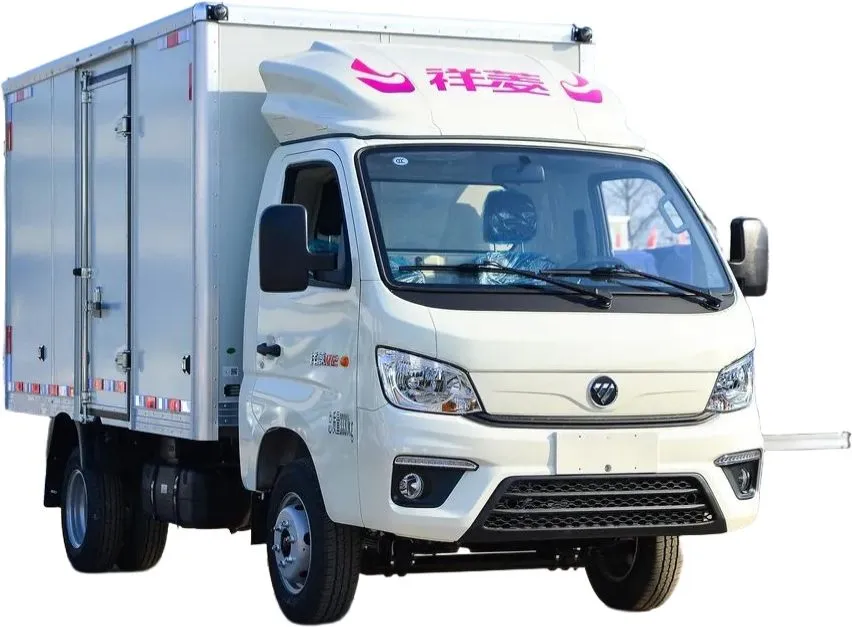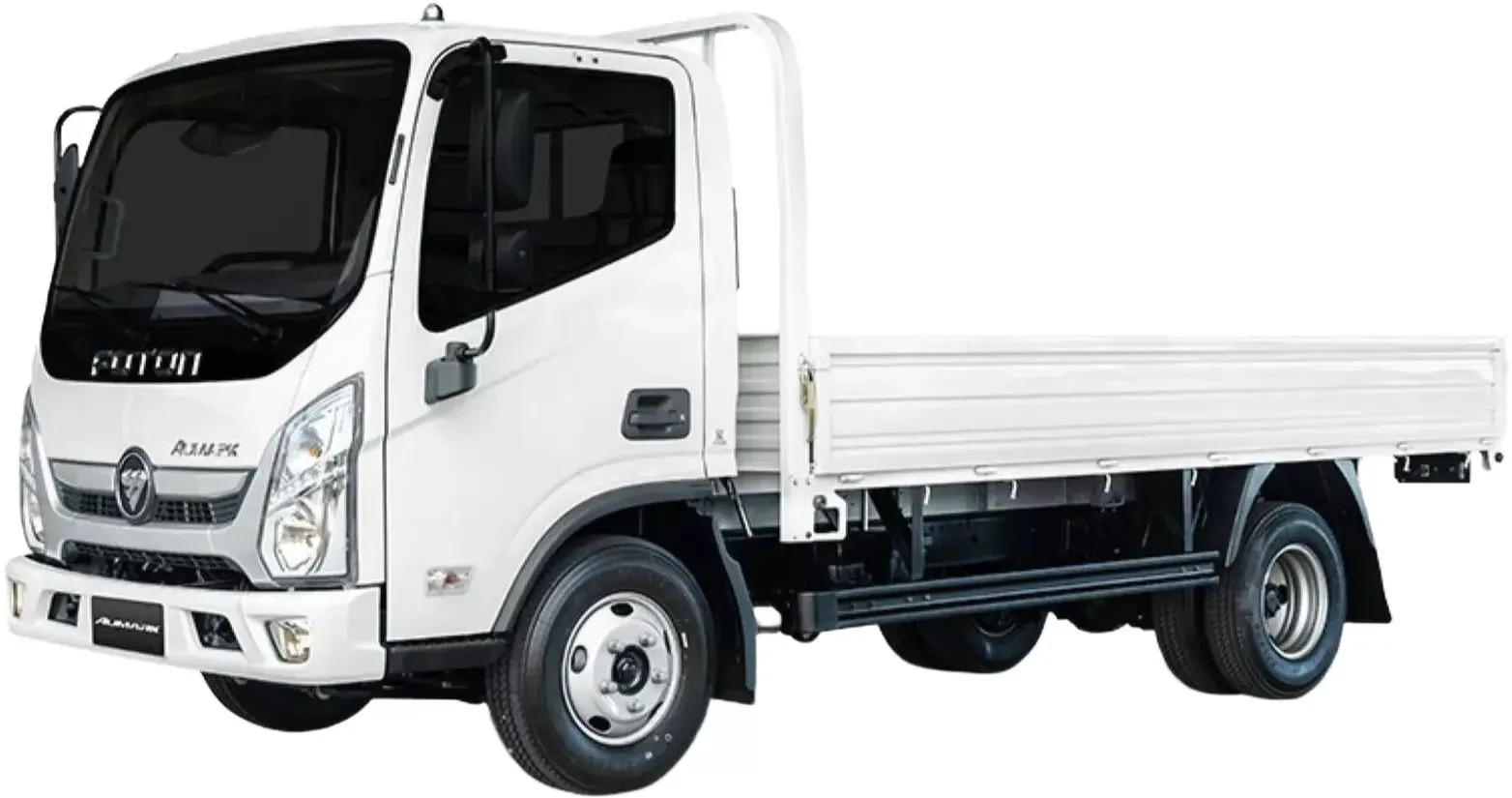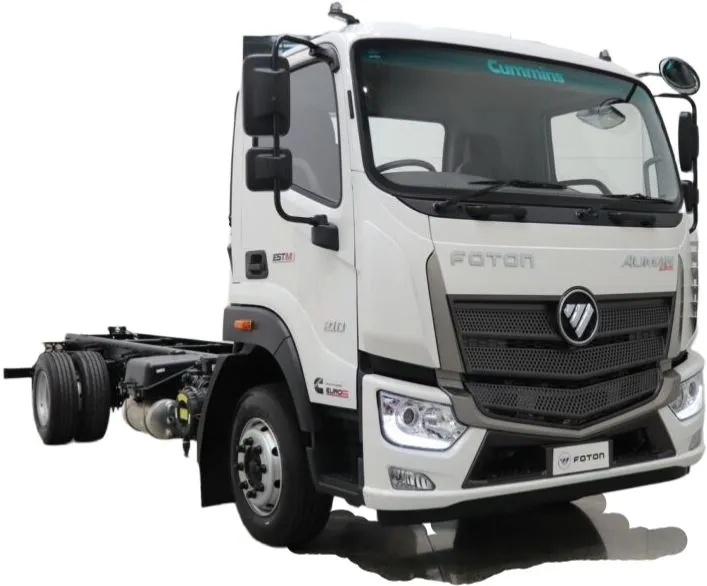
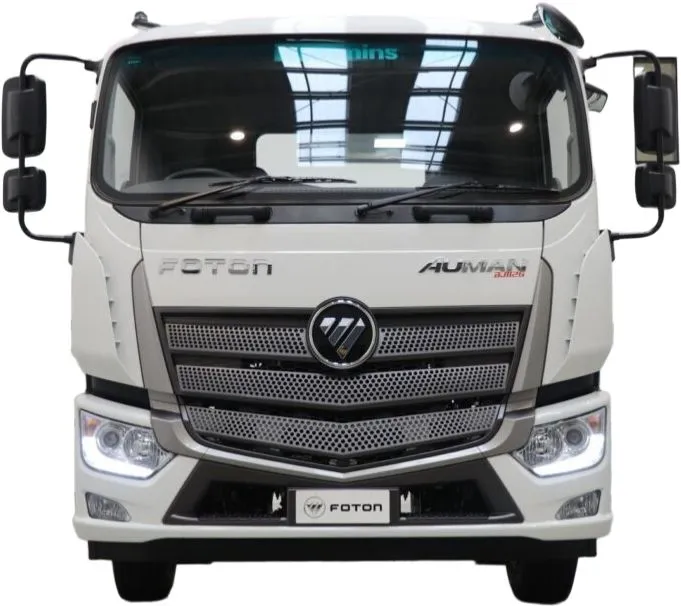
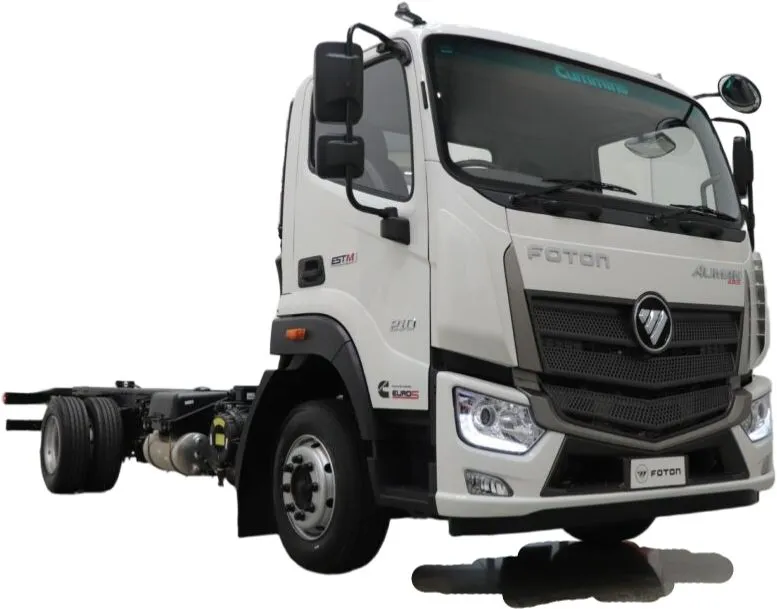
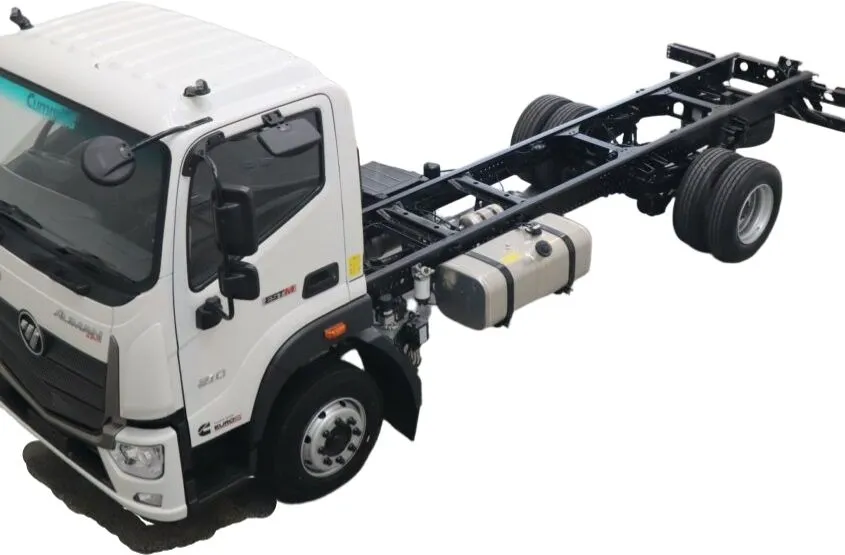


Regional freight in Venezuela is priced by the tonne-kilometre and settled by what survives the season, so the EST-M 4x2 cargo truck listed for that market is specified around three things: a heavy chassis, an engine that tolerates variable fuel, and brakes that hold on a descent. It is a diesel cargo carrier in 6x4 form, left-hand drive, gross vehicle weight stated at 35 tonnes, built on a 4100 plus 1350 mm wheelbase and powered by the Yuchai YC6A260-33, 7250 ml, 191 kW or 260 hp, with 1000 N·m of torque at Euro II. Shaanxi Fast supplies an eight-speed overdrive manual, the front axle is rated 6.5 tonnes, two 10-tonne 440 reinforced single-reduction drive axles run at 5.571, fuel capacity is 600 litres in aluminium, and maximum speed is 90 km/h. No body dimensions appear in the record, so the freight box remains the buyer's decision.
The engine carries the argument. At 7250 ml and 1000 N·m in a 260 hp state of tune, this is a large-displacement, moderate-output diesel, a configuration chosen for torque reserve and longevity rather than for speed, and it matches the 90 km/h ceiling exactly. Displacement is the mechanism that makes 35 tonnes tractable without revs: a seven-and-a-quarter-litre unit can pull a loaded driveline from low engine speed, which keeps clutch slipping, gear hunting and temperature spikes off the duty cycle on the long climbs. The emission level is Euro II, with no aftertreatment model, no dosed additive system and no selective-reduction equipment recorded, so there is no urea supply chain to source, no dosing module to fail, and no catalyst substrate exposed to the sulphur and water content that a distant fuel supply can carry. Cooling is a conventional silicone-oil fan clutch with a rigid fan guard and an engine side mudguard, all simple, all serviceable with hand tools.
The gearbox is the second half of the driveline story. The eight-speed Shaanxi Fast 8JS118TC-B is specified as an overdrive unit in manual form with a cast iron housing and soft-shaft gear control, reverse located at the rear of the case. Eight forward ratios with an overdrive top make a wide band, and a wide band is what lets one truck do two jobs: the low ratios move a loaded vehicle from a standstill on an unsealed ramp, the top ratios keep engine speed sane on flat trunk running, and the intermediate steps mean the driver finds a gear that holds speed on a long grade instead of resting on the brakes. Clutching is a 430 mm diaphragm-spring unit in push form from Hubei Sanhuan, actuated pneumatically with air assistance, so the pedal effort that would tire a driver over a market day of starts is reduced by the same air system that pressurises the braking circuit.
Gearing and axle capacity deserve the closest reading, because together they decide what the vehicle can lawfully carry. The front is a 6.5 tonne axle, while the drive units are two 10 tonne 440 reinforced single-reduction axles geared at 5.571, an axle rating sum of 26.5 tonnes set against a stated gross vehicle weight of 35 tonnes. That gap must be reconciled against the certificate for the exact body before any load plan is written, since the lower figure governs the axle group and the higher figure governs the vehicle class. A single-reduction layout is the preferred architecture for this duty, having no portal or planet-reduction joints to add cost and heat under continuous load, and 5.571 is quick for trunk running yet correct for a rigid that stops frequently. In sugarcane haulage truck work, where the load is bulky, the surfaces are unsealed and the axle group takes curb strikes and water crossings, that gearing plus a reinforced housing is the practical combination.
Suspension is leaf springs front and rear, a multi-leaf standard pack of ten leaves at the front on a 1400 mm length and twelve at the rear, with no stabiliser bar at either end. It is the older, heavier answer and the right one where the road has been allowed to fail: a multi-leaf pack carries the payload, absorbs the abuse, and can be re-bushed or re-clamped at any roadside workshop, while the extra rear leaves sit under the mass of a bulk body. Steering is a recirculating ball box with a 117 mm bore in a non-through structure with hydraulic power assistance, the heavy-duty layout that tolerates pothole kickback, takes adjustment rather than replacement when the truck is knocked out of alignment, and keeps a laden vehicle steer-able in traffic. As a heavy duty freight truck crossing this route network, that steering box plus twelve rear leaves is the specification deciding whether the truck finishes the season intact.
Braking is the item most likely to be judged from abroad, and the list here is unusually complete for a Euro II build. Service braking is full air with drums at all wheels, an air-off spring brake for parking, a load-sensing valve proportioning the rear circuit, and self-adjusting arms on the rear axles so shoe clearance is maintained without a wrench. A four-sensor four-modulator ABS is fitted, backed by an air dryer with a four-circuit protection valve and aluminium reservoirs, which together keep the supply dry and stop a failure in one circuit from emptying the rest. The auxiliary brake is a constant-pressure exhaust brake, a throttle in the exhaust path that raises back-pressure and slows the engine, and on a loaded descent it is the difference between arriving and arriving twice. As a bulk material transport truck on long grades, that exhaust brake plus the low gearing is the whole retardation story, since no hydraulic retarder or decompression engine brake appears in the record.
Wheel and tank specification is short but telling. Tyres are 295/80R22.5 at eighteen-ply rating with an all-steel carcass, a mixed tread fitted to front and rear axles, running on steel rims with integral wheel shields that include splash protection, and one spare carried on the vehicle. An all-steel casing is the serviceable choice because it can be retreaded, and on a truck of this size retreads are where operating cost is won. Mixed tread front and rear is an honest compromise, grippy enough on loose surfaces and quieter on asphalt than a deep lug, while the 295 width keeps rolling resistance reasonable at the 90 km/h ceiling. The 600 litre aluminium tank is mounted on the left, sized for trunk distances between fuel stops, with aluminium chosen for mass and for resistance to the internal corrosion that poor diesel accelerates. Splash shields behind each wheel keep stone strike off the following vehicle and off the truck's own body panels.
Four businesses fit this chassis. The first is general regional freight, the trade that first suggests a 4x2 cargo truck: mixed and palletised loads in an enclosed or curtain-side box, running between Caracas, Valencia and Lake Maracaibo on trunk highways where eight ratios and 600 litres of fuel matter more than outright speed. The second is agriculture in its bulky forms, grain in bags, sugar, coffee and plantain, where the rear axle group and the twelve-leaf pack do the carrying. The third is loose construction material, cement, sand, chipped stone and block, moved to sites where an articulated combination cannot turn. The fourth is industrial and consumer goods, beverages, packaged food, fittings and household freight, moving to a schedule rather than a harvest. The cab carries a combined manual heating and cooling unit, a reversing radar with its own control module, an MP3 player with radio and two speakers, and a 24-volt socket, equipment that matters to drivers who live in the vehicle.
Ownership economics on a build like this are settled not by the purchase price but by what fails and how often. A Euro II mechanical diesel without urea dosing removes an entire failure category and an entire supply dependency, and the parts that will wear, clutch facings, brake shoes, leaf springs, shackles, fan belts, filter elements and wheel seals, are commodity items in any regional capital. Air-side complexity is nonetheless real: a dryer, four protection circuits, a load-sensing valve, spring brake chambers and an electronic ABS are each serviceable but none is optional, so an operator without a competent air-brake fitter should price that before preferring this truck to a simpler machine. Bought as a heavy duty freight truck for a decade of service rather than three years of resale, the sensible specification is the one that keeps descents slow and the maintenance calendar short, which is precisely the work the exhaust brake, the dryer and the rear leaf pack are doing.
State plainly what the record does not contain. Beyond the 600 litre tank, no fuel consumption, range, gradeability or turning circle figure is published and none is claimed here; no cargo body dimensions, body mass, payload or kerb weight appear for this configuration, so effective payload as delivered cannot be computed from these data and must be taken from the certificate. The 35 tonne gross figure and the 26.5 tonne axle sum are not the same constraint, and both need reconciling before a body is commissioned. No warranty, service interval or after-sales term appears in the record and none is implied. What is stated is coherent: a high-torque, moderate-output, no-aftertreatment diesel with a wide-ratio manual, a reinforced axle group, a full air system with ABS, a load-sensing valve and an exhaust brake, one sugarcane haulage truck and trunk-line freight carrier in the same specification. Send your route profile, your loaded descent altitudes and the body you intend to build, and a bulk material transport truck duty cycle can be checked against those ratios before you commit.