Writer:Alan Chen(Foton Auman dealer)
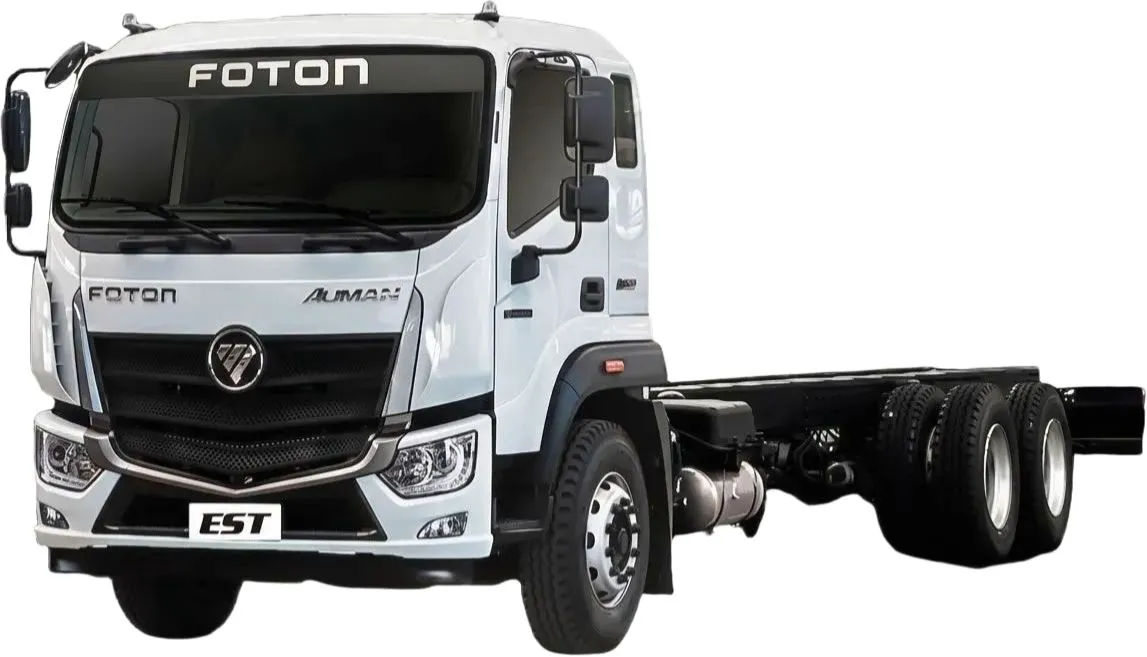
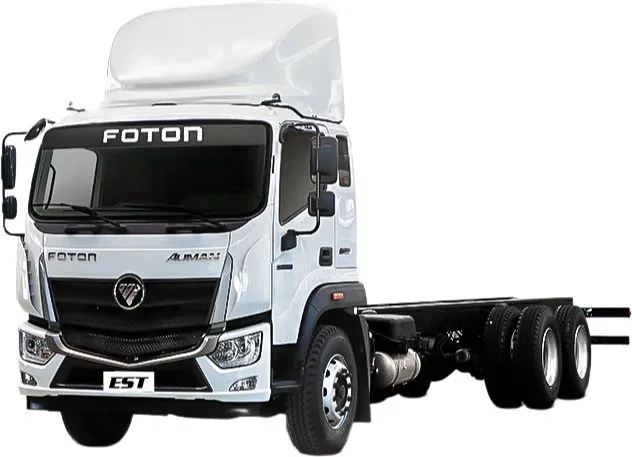
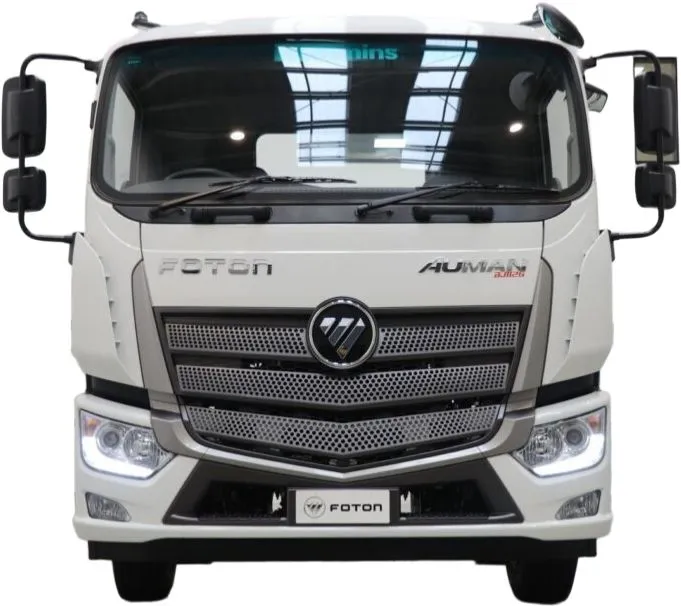
Regional freight in Venezuela is priced by the tonne-kilometre and settled by what survives the season. So we read the EST-M 6x4 cargo truck the way an operator would: what fails first, and what it costs to fix. This is a left-hand-drive diesel 6x4 with gross vehicle weight stated at 35 tonnes on a 4100 + 1350 mm wheelbase, powered by the Yuchai YC6A260-33 — 7,250 ml, 191 kW (260 hp) and 1,000 N·m at Euro II — driving through a Shaanxi Fast eight-speed overdrive manual onto two 10-tonne single-reduction drive axles at 5.571. At USD 38,683 it sits far below any European equivalent. The interesting part is where that gap was found.
At 7,250 ml producing 260 hp, this is a large-displacement, moderate-output diesel — a configuration chosen for torque reserve and longevity rather than speed, and one that matches the 90 km/h ceiling exactly. Displacement is the mechanism that makes heavy weight tractable without revs: a seven-and-a-quarter-litre unit pulls a loaded driveline from low engine speed, which keeps clutch slipping, gear hunting and temperature spikes off the duty cycle on long climbs.
The emission level is Euro II, and the record lists no aftertreatment model, no dosed additive system and no selective-reduction equipment anywhere. Read that as an operating decision rather than a spec omission: there is no urea supply chain to source, no dosing module to fail, and no catalyst exposed to the sulphur and water content that a distant fuel supply can carry. Cooling uses a silicone-oil fan clutch with a rigid guard ring and an engine side mudguard — simple parts, serviceable with hand tools in any workshop in the interior.
The Shaanxi Fast 8JS118TC-B is specified as an eight-speed overdrive manual in a cast iron housing with soft-shaft gear control and reverse at the rear of the case. Eight ratios making a wide band is what lets one truck do two jobs: low gears shift a loaded vehicle from standstill on an unsealed ramp, the top gears keep engine speed reasonable on flat trunk running, and the intermediate steps let the driver hold speed on a long grade instead of riding the brakes.
"Eight ratios are what let this one truck be both a loading-yard machine and a trunk-line hauler."
Clutching is a 430 mm diaphragm-spring push-type unit from Hubei Sanhuan, pneumatically actuated and air-assisted, so the pedal effort that would exhaust a driver over a day of starts is taken by the same air system that feeds the brakes. Two things to tell recruits: reverse sits at the rear of the case and the shift is soft-shaft.
This is the single most important item on the sheet. There is a 6.5-tonne front axle plus two 10-tonne 440 reinforced drive axles — 26.5 tonnes of rated axle capacity set against the 35-tonne gross in the same record. Both cannot be the binding limit. When you commission a body, the governing constraint is how much mass the rear drive group carries once cab, chassis, the 600-litre tank and freight are distributed, and the rear tandem normally takes most of it.
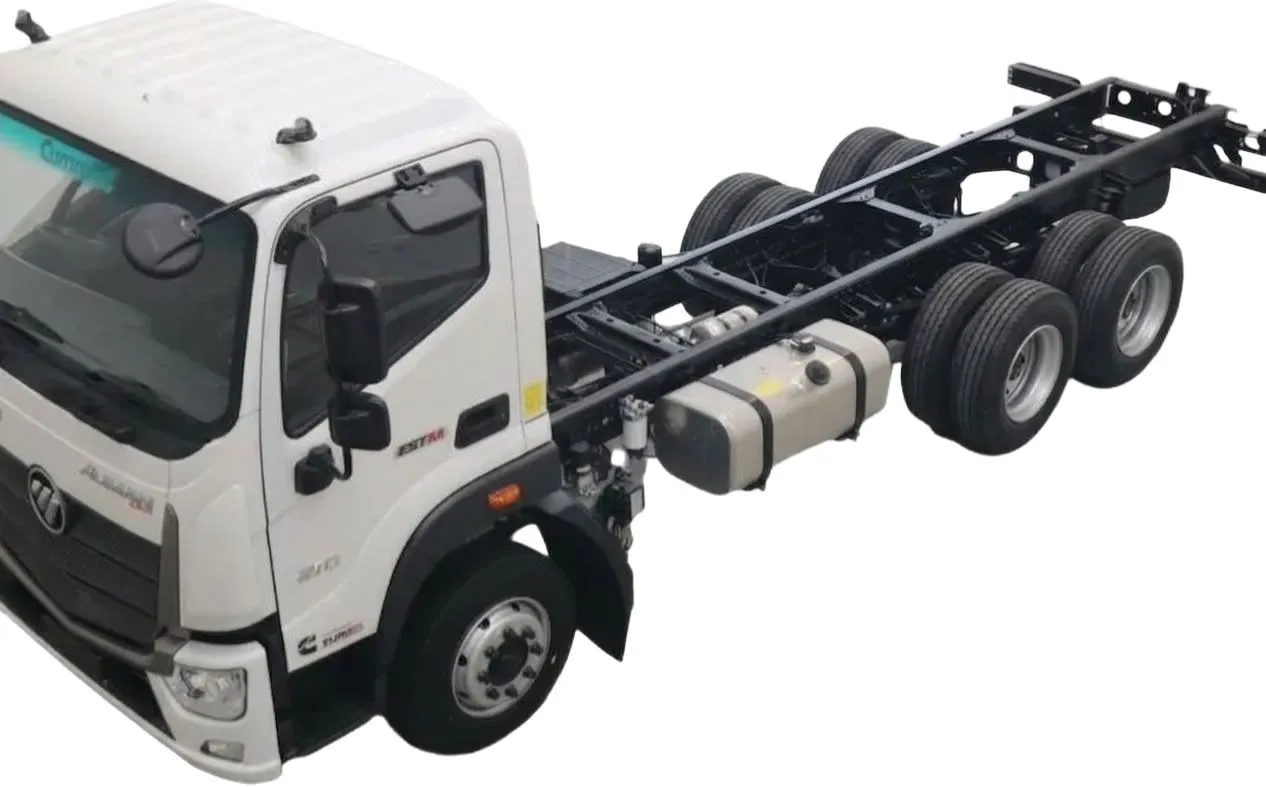
A heavy steel body plus dense freight can overload the drive axles long before the truck reaches 35 tonnes on a weighbridge, and it shows as cracked spring seats, hub and bearing heat, drive-tyre wear and a rear end that loses grip first in the wet. So fix the body tare and its load distribution first, then check the completed-vehicle certificate. Treat 35 tonnes as the class it was designed to, not as licence to load to it.
Suspension is leaf springs at both ends — ten leaves up front on a 1,400 mm length, twelve behind — with no stabiliser bar either end. Multi-leaf packs carry the payload, absorb abuse and can be re-bushed at any roadside workshop. Steering is a recirculating ball box of 117 mm bore in a non-through structure with hydraulic assistance, the heavy-duty layout that tolerates kickback and takes adjustment rather than replacement when a bad road knocks alignment out.

This list is unusually complete for the money. Service braking is full air with drums all round, an air-release spring brake for parking, a load-sensing valve proportioning the rear circuit, and automatic adjustment arms on the rear axles so shoe clearance is maintained without a wrench. ABS is fitted as a 4S4M system — four sensors, four modulators — backed by an air dryer with a four-circuit protection valve and aluminium reservoirs, so the supply stays dry and one failed circuit cannot empty the others.
The auxiliary brake is a constant-pressure exhaust brake. It raises back-pressure in the exhaust path to produce retarding torque at the engine, holding speed on a gradient without pedal use and without turning vehicle mass into heat in the drums. Useful, but weaker than a hydraulic retarder or decompression engine brake, neither of which appears in the record. On a long descent at gross weight, select a gear that keeps engine speed where the exhaust brake works and let the driveline do it; use the service brakes only to slow further or stop.
"Brake-fade recovery on drums of this size is measured in kilometres, not minutes. Plan descents in gear."

Tyres are 295/80R22.5 at eighteen-ply with an all-steel carcass and mixed tread front and rear, on steel rims with splash-protection shields, plus one spare carried on the vehicle. An all-steel casing can be retreaded, and on a truck this size retreads are where operating cost is decided.
The 600-litre aluminium tank is left-mounted and sized for long distances between fuel stops, in aluminium for mass and for resistance to the internal corrosion that poor diesel accelerates. In the cab you get a combined manual heating and cooling unit, an MP3 player with radio and two speakers, a 24-volt socket and a reversing radar with its own control module — equipment that matters when drivers live in the vehicle for days.

General regional freight is the obvious one: mixed and palletised loads in an enclosed or curtain-side body running the trunk routes, where eight ratios and 600 litres matter far more than outright speed. Agriculture in its bulky forms — bagged grain, sugar, coffee, plantain — puts the rear axle group and the twelve-leaf pack to work. Loose construction material such as cement, sand and block is moved to sites an articulated combination cannot turn in.

And in sugarcane haulage the load is bulky, the surfaces unsealed and the axle group takes kerb strikes and water crossings — exactly where reinforced single-reduction housings and 5.571 gearing earn their keep. Ownership economics here are not settled by purchase price but by failure frequency: a Euro II mechanical diesel with no urea removes a whole failure category, and the wearing parts are commodity items in any regional capital.

Be clear about the gaps, because they are large. Beyond tank capacity, no fuel consumption, range, gradeability or turning circle figure is published, so we quote none. No cargo body dimensions, body mass, payload or kerb weight appear for this configuration, so effective payload as delivered cannot be computed from this data — it must come from the certificate for the body you build. The 35-tonne gross and 26.5-tonne axle sum must be reconciled before you commission anything.
"Air-side complexity is real: a dryer, four circuits, spring chambers and ABS are each serviceable and none is optional."
No warranty, service interval or after-sales term appears in the record and none is implied. Homologation for Venezuelan registration and anything other than the listed left-hand drive must be confirmed with your dealer before signing. Everything above comes from the build record for the EST-M 6x4 cargo truck and nothing else.
The axle ratings, not the headline gross. Specify the body material, length and tare first, work out how much mass the rear tandem actually carries once cab, chassis and 600 litres of fuel are distributed, then check the completed-vehicle certificate mass. A heavy steel body plus dense freight overloads the drive group long before 35 tonnes shows on a weighbridge, and the symptoms are cracked spring seats, hub heat and drive-tyre wear.
For a 6x4 rigid at this weight, yes — it is the eight-speed box that makes it work. A 7,250 ml engine making 1,000 N·m does not need revs to keep a loaded vehicle moving, and the overdrive top recovers the highway case. Give the dealer your heaviest loaded cycle, the altitude of your climbs and the distance between stops, and let the ratio be checked against that profile rather than against a catalogue.
In gear, with the service brakes as final reserve. The constant-pressure exhaust brake holds speed without pedal application and without cooking the drums, but it is weaker than a hydraulic or decompression brake. Train drivers to select a gear that keeps engine speed in the effective band, supported by ABS, the load-sensing valve, self-adjusting rear arms and the four-circuit protection valve behind the dryer.


Tel:+8615960378211
Email:[email protected]
Address: Unit 8,room 704,NO.492,XingLinWan Road,Jimei District,XiaMen Fujian China
Address: Unit 8,room 704,NO.492,XingLinWan Road,Jimei District,XiaMen Fujian China
Email:[email protected]
© Authorized Dealer of FOTON AUMAN 2026 All Rights Reserved, Auman truck is a commercial vehicle brand under the Foton Daimler
Privacy policy