

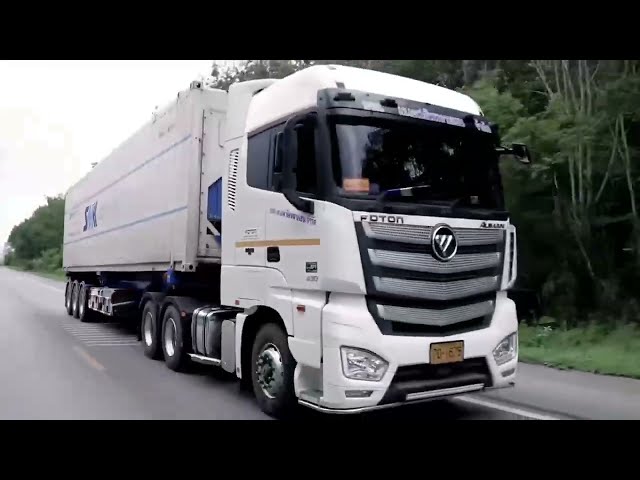


Designed for demanding line-haul and regional freight operations, the BJ4259SMFKB-10 is a high-roof EST semi-trailer tractor from the 6 Series. This 6x4 tractor truck combines a 55-ton vehicle-and-cargo gross weight reference with a 343 kW / 460 PS ISGe3-460 diesel engine, a 12TX2421TD aluminum automatic transmission with retarder, and a 13T rear axle. Its 3300+1350 mm wheelbase, 6950x2490x3970 mm overall dimensions, 9200 kg curb weight and 700L aluminum alloy fuel tank define a tractor prepared for sustained freight work rather than occasional light-duty transport. A high-roof cab, full-floating airbag suspension and H4 standard interior further support long hours behind the wheel.
The powertrain is centered on the ISGe3-460, an 11800 ml diesel engine with high-pressure common-rail injection. It is rated at 343 kW and 460 PS at 1900 r/min, with maximum torque of 2100 N·m available from 1000 to 1500 r/min. That torque range is important for a tractor working with a heavy combination because it gives the driver a broad operating window for pulling away, climbing and maintaining momentum before an unnecessary downshift. The viscous fan helps manage engine cooling demand, while the horizontal air filter and vertically mounted square muffler provide a practical engine-bay arrangement for a commercial vehicle intended for continuous operation. The emission level is Euro III, which should be matched with the registration and fleet requirements of the intended market.
The automatic transmission is the 12TX2421TD with aluminum housing and integrated retarder specification. Automatic transmission control reduces the need for constant manual gear selection in traffic, on rolling highways and during repeated loading-route cycles. More importantly, the transmission and retarder are specified as one operating package. The retarder can contribute to speed control during long descents and reduce dependence on the service brakes when conditions and operating procedures allow. For fleet buyers, this means the drivetrain is not only about peak engine output; it is also about controlling a heavy combination with a more consistent driving rhythm.
For a heavy duty prime mover, pulling performance must be considered together with axle loading, saddle load and trailer mass. The specification lists a 6.5T front axle, a 13T rear axle and a design saddle load of 17670 kg. It also lists a maximum design gross vehicle weight of 25000 kg and a permitted towed trailer gross weight of 45670 kg. The vehicle-and-cargo gross weight reference is 55T. These figures serve different certification and operating purposes, so the final legal combination must follow the completed vehicle certificate, trailer certificate, axle limits and local road regulations. The listed 9200 kg curb weight should not be treated as the final operating weight after accessories, fifth-wheel position, driver, fuel and trailer equipment are added.
The 13T rear axle uses a 3.364 drive ratio and a stamped-and-welded axle housing. The self-adjusting slack adjuster and ABS are included in the rear axle description, giving the braking system a defined heavy-vehicle safety configuration. A 3.364 final drive is a balanced specification for a tractor that needs both loaded pulling ability and road-speed efficiency, although the correct operating result will still depend on trailer weight, terrain, tire diameter, traffic and driving behavior. The 6.5T front axle provides the steering axle foundation, while the 6x4 arrangement distributes drive through two rear axles for stronger traction than a 4x2 layout in demanding freight conditions.
The frame uses a 225/286x80x8 mm rail cross-section. This substantial frame architecture gives body and fifth-wheel installers a clearly defined structural base for a tractor designed around high combination weights. The wheelbase is arranged at 3300+1350 mm, creating a compact tractor layout with two rear axles while maintaining a practical fifth-wheel position. The exact saddle position, trailer kingpin setting and axle-load distribution must be checked during final configuration because the same tractor can operate with different trailer lengths, body types and cargo distributions. A correctly positioned fifth wheel is essential for staying within the front and rear axle limits.
Suspension is configured with longitudinal front leaf springs, a stabilizer bar and shock absorbers, while the rear uses an open-type balanced suspension with leaf springs. The leaf spring count is three at the front and five at the rear. This arrangement is aimed at durability and load support in commercial service, with the balanced rear suspension helping the two driven axles share vertical loads across uneven surfaces. The combination of leaf springs, a strong frame rail and a 13T rear axle gives the tractor a straightforward mechanical foundation that can be inspected through familiar commercial-vehicle maintenance procedures.
Braking is organized around a dual-circuit air-brake system with drum brakes at both the front and rear. The parking brake uses a spring-applied air-release design, while auxiliary braking combines engine braking with the hydraulic retarder in the transmission. This layered brake architecture is valuable on a hydraulic retarder truck because each system has a different role. The service brake provides normal stopping, the spring brake holds the parked vehicle, the engine brake supports deceleration, and the hydraulic retarder can assist during controlled downhill speed management. Drivers must still follow local operating procedures and select braking methods according to road gradient, load and weather.
The 315/80R22.5 18PR tire specification uses a steering pattern on the front axle and a drive pattern on the rear axles. The 18PR rating identifies a tire construction intended for commercial load service, while the 22.5-inch wheel size is widely used on heavy tractors and trailers. Tire selection alone does not authorize operation above the listed vehicle or axle limits. Tire pressure, tread condition, wheel alignment and matching between dual-axle positions remain essential for safety and operating cost control. Fleet managers should establish inspection routines that cover the steering tires, both driven axles and the spare or replacement policy used by the fleet.
The high-roof cab is built for a two-person crew and uses a full-floating airbag cab suspension. Airbag mounting helps isolate the cab from chassis vibration, while the high-roof design provides a more spacious working environment than a low-roof tractor. The H4 standard interior adds a defined cabin specification, and the standard equipment includes an air-suspension seat, electric windows, central locking, unified five-lock control and electrically heated mirrors. These features support daily use in changing weather and reduce driver effort during long-distance operation. The electric cab-tilting system also improves access for engine-bay inspection and maintenance.
Driver convenience is supported by electric air conditioning, MP3, radio and USB functions. The current specification states no radar in the entertainment-system line, so buyers should not assume a radar-based parking or proximity warning system is included. The working platform is available, and the split wheel arch covers provide a defined exterior arrangement around the tractor's rear wheels. A one-piece fiberglass large bumper completes the front-end design. These details are practical rather than decorative: access to the working platform, cab controls and exterior service areas affects how quickly a fleet can conduct inspections between routes.
The 700L aluminum alloy fuel tank is one of the most significant range-oriented features in the configuration. It gives the fleet a large fuel reserve for planned line-haul routes, but the actual distance between refueling stops depends on payload, trailer type, road gradient, traffic, engine condition, tire pressure and driving style. No fuel-consumption or range figure is provided, so those values should not be promised before route testing. The correct purchasing decision is to compare the route distance and available refueling infrastructure with the tank capacity, while also considering the additional mass of fuel when calculating axle and combination weights.
For long-distance logistics, a long haul tractor needs more than engine power. It needs predictable control, a comfortable cab, adequate fuel storage, reliable axle load distribution and braking equipment suited to the combination. The BJ4259SMFKB-10 brings these elements together through its high-roof cab, 700L aluminum tank, automatic transmission, 3.364 rear axle ratio, airbag cab suspension and hydraulic retarder. The 110 km/h maximum speed is a listed vehicle specification, not a recommendation to exceed local speed limits. Route planning should always consider legal speed restrictions, trailer conditions, road quality and weather.
The tractor is also suitable for fleets that need one platform for different semi-trailer assignments. The fifth wheel is provided, and the 17670 kg design saddle load gives body and trailer planners a clear starting point for configuration. Depending on the trailer type, the final kingpin position and cargo loading plan will influence front and rear axle loads. Tank trailers, box trailers, curtain-side trailers and other combinations should therefore be reviewed individually. The tractor's 6x4 layout gives it a strong base for heavy freight, but the completed combination remains a system whose legal capacity is determined by the weakest certified limit.
Maintenance planning benefits from the specification's conventional structure. Diesel high-pressure common-rail injection, drum brakes, leaf spring suspension, air braking and commercial 22.5-inch tires are all clearly identified, allowing a fleet to build inspection and replacement schedules around specific components. The aluminum transmission housing, viscous fan, horizontal air filter and vertical square muffler should be included in routine service checks. The engine brake and hydraulic retarder also require correct operating procedures and scheduled inspections. The available data does not state warranty terms, service coverage or spare-parts commitments, so these items should be confirmed separately in the commercial agreement.
In daily operations, the tractor should be matched to routes where the listed 55T vehicle-and-cargo reference, 45670 kg permitted trailer gross weight and axle ratings are legally appropriate. Operators should verify the trailer's empty mass, cargo distribution, fifth-wheel loading and total combination mass before dispatch. The 25% maximum gradeability figure is part of the supplied specification, but actual hill performance varies with load, surface, altitude, weather and driver technique. It should be used as a technical reference rather than as a guarantee for every road condition.
Overall, the BJ4259SMFKB-10 is a 6x4 EST tractor built around high-output diesel power, automatic shifting, a hydraulic retarder, a high-roof comfort package and a large fuel tank. Its 460 PS rating, 2100 N·m torque, 13T rear axle, 315/80R22.5 18PR tires and 700L aluminum tank make it a serious commercial configuration for heavy combination transport. The final order should confirm the applicable certificate masses, trailer matching, axle distribution, local Euro III requirements and operational route. With those items aligned, the 6x4 tractor truck provides a defined platform for demanding freight work without relying on unverified fuel economy, payload or service promises.
For buyers selecting a heavy duty prime mover, the strongest case for this model is the balance between pulling capability and driver control. The engine supplies 343 kW / 460 PS and 2100 N·m, while the automatic 12TX2421TD transmission, engine brake and hydraulic retarder help convert that output into manageable road operation. The air-suspended cab, electric air conditioning, standard air-suspension seat and heated mirrors address the human side of long working hours. The result is a tractor specification that can be evaluated through measurable components instead of general claims.
As a long haul tractor, it is best evaluated with the actual trailer, route and cargo plan. Buyers should confirm the 55T operating target against the legal combination limit, use the listed 9200 kg curb weight only as the stated reference, and verify the final weight after fuel, fifth-wheel equipment and optional items are included. Route testing can then establish the real fuel schedule, braking behavior and grade performance. This evidence-based approach protects the fleet from overloading and ensures that the tractor's engine, axles, tires and retarder are used within their certified operating range.
The final operational advantage comes from the integrated control systems. A hydraulic retarder truck can reduce the frequency of service-brake application during suitable downhill sections, while ABS, dual-circuit air braking and spring-applied parking braking provide separate layers of control. These systems do not remove the need for driver training or inspection, but they give the fleet more tools for managing a heavy semi-trailer combination. Combined with the high-roof cab, full-floating airbag suspension, 700L aluminum tank and 6x4 drive layout, the BJ4259SMFKB-10 is configured as a practical EST tractor for demanding commercial transport.


