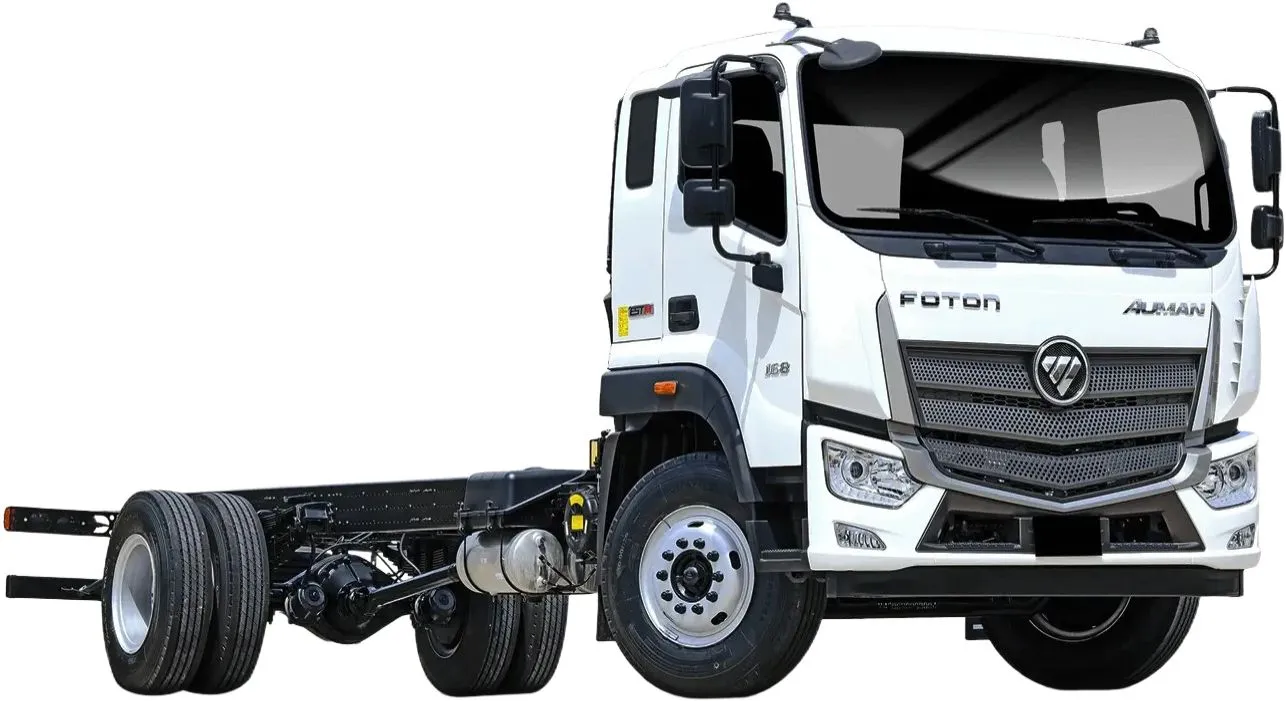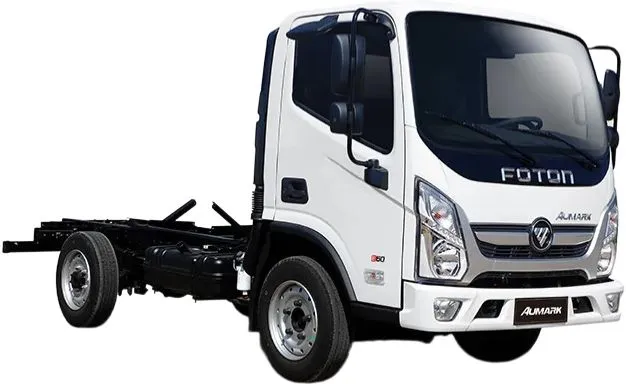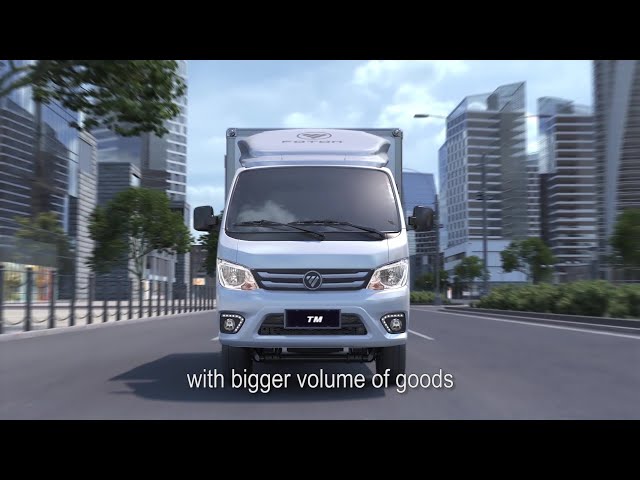


A small truck does not have to be clever to make money. It has to carry enough, start every morning, fit through the gate, and cost nothing exotic to keep running. The BJ1030V4JV2-BH Xiangling M1 is built on that theory: a 0.75-tonne-class unibody petrol mini truck on a 2400 mm wheelbase, carrying 1455 kg on the flat bed, a load floor only 810 mm off the ground, electric power steering, and a 1.5-litre multi-point injection engine needing no diesel aftertreatment at all. Approved for export to Myanmar as a Euro II model, it reads like a machine designed for hot, humid, dense cities where fuel price sets the schedule and every kilogram of body weight is a kilogram of freight not sold.
Start with construction, because it decides what the vehicle feels like to drive. This is a TM1 semi-load-bearing body rather than a ladder frame with a cab bolted to it. The structure is integral, with rail sections measured at 100 by 60 mm at the front, 200 by 60 mm in the middle and 130 by 60 mm at the rear, and an outer width of 1150 mm. That gradient is where a unibody earns its living: reinforcement where payload and body mounting actually load the structure, nothing wasted where they do not. Front axle rating is 1.0 tonne with independent suspension; the rear is an insert-tube type 102 axle rated at 1.5 tonnes with an 80 by 6 mm section, and the main reduction ratio is 4.778. The consequence is a vehicle that behaves like a car on the way to a drop and like a truck at the drop.
The powertrain is where this build makes its most deliberate commercial argument. The DAM15R from Harbin Dongan Automotive Engine displaces 1.498 litres, produces 82 kW and 142 N·m on a 12-volt system with multi-point electronic fuel injection and an electric cooling fan. Vehicle emission level is Euro II, achieved without a three-way catalytic converter: this model replaces the converter with a two-stage silencer, deletes the rear oxygen sensor and runs freshly calibrated engine data. That decision has three consequences to price in. No catalyst to poison when fuel quality varies between stations, and none to replace. No rear oxygen sensor to diagnose, replace or bypass. The exhaust is a silencer rather than a filter, which any workshop can fabricate locally. For a market where the nearest diesel aftertreatment specialist may be a day away, a gasoline light truck keeps the maintenance bill inside the capacity of an ordinary roadside garage.
Pair that engine with the DAT18R manual gearbox and the character becomes clear. A single dry diaphragm-spring clutch with hydraulic actuation drives the road wheels through a manual box into that 4.778 final drive. The combination is short-geared by design, which is the correct answer to what a loaded mini cargo truck actually does: pull away from a stop with weight behind the cab, climb a flyover ramp, crawl through a market lane, repeat. Peak power of 82 kW is not a highway figure, and the 110 km/h maximum speed confirms the class. It is built to make twenty short deliveries a day rather than one long one, and every part of the driveline is specified to survive that.
Chassis dynamics explain why drivers accept the work. Front suspension is MacPherson independent, steering is rack and pinion with electric power assistance, the rear a non-independent longitudinal five-leaf spring with tube shock absorbers. Hydraulic discs sit at the front, drums at the rear, with ABS plus EBD standard and a wheel-side hand brake for parking; there is no auxiliary braking system fitted. Compared with a conventional mini truck on leaves all round and a recirculating-ball box, this one tracks closer to a passenger car and needs no arm strength to park. Over a shift with eighty stops, electric power steering is the difference between a driver who finishes the round and one who asks to be reassigned. ABS with electronic brakeforce distribution matters disproportionately on an axle that goes from empty to nearly 1.5 tonnes between two stops, because empty is where a truck without proportioning loses restraint at the back.
Now the part that pays for everything else: load space. Body status code 1520 sits in a product line designated 1520 by 2400, and finished dimensions depend on the body fitted. In flat bed form the vehicle measures 4650 by 1680 by 1920 mm with an internal deck of 2820 by 1560 by 360 mm, carrying 1455 kg with two occupants at 1210 kg kerb and 2795 kg gross. In box form it measures 4700 by 1695 by 2420 mm with a compartment of 2820 by 1560 by 1570 mm, carrying 1355 kg at 1310 kg kerb and the same gross. The bare chassis with cab is 4470 by 1590 by 1850 mm at 2805 kg gross and 975 kg kerb. Stake-body approval is not available on this model, so the choice is genuinely between open and enclosed.
The box gives up 100 kg of payload to buy weather protection and a lockable compartment, a fair trade for parcels, food and appliances, or anything that cannot sit under rain or be lifted from an open bed at an unattended stop. The flat bed returns that 100 kg plus freedom to carry long, tall or awkward freight, and can be specified as a three-side-opening body with a corrugated floor, which building-materials and produce operators ask for because they unload from three sides without unpacking a load. In either body, 810 mm deck height is the quiet selling point: a lip below hip height means two people hand-load in far less time, no tail lift or dock is needed, and the vehicle serves a shopfront with no infrastructure at all.
Footprint is the third advantage and decides which contracts a fleet can bid for. At 1695 mm wide and 4700 mm long this is narrower and shorter than almost any diesel light commercial with a real payload. It fits the service lane behind a shophouse, the corner of a wet market, a residential compound gate, a basement ramp a taller vehicle cannot enter, and a kerbside bay without blocking the lane while the driver walks back. Where a larger truck parks and walks, a small box truck drives up to the door, and door-side minutes are what a delivery route is measured in.
Where does that add up to revenue? Retail replenishment between a warehouse and a chain of convenience stores, phone shops, pharmacies and bakeries is a duty of many small drops, no loading docks, frequent signature handovers, and cargo that must stay dry and closed. A small box truck on this chassis is the right size for that work, and central locking, remote key, power windows, anti-glare mirror, electric headlamp leveling, LED daytime running lights and front fog lamps are standard on every unit. Open freight is the second case. Building materials, furniture, produce, beverage crates, machine parts and agricultural inputs all prefer a flatbed utility truck that carries a tonne and a half of awkward goods at 810 mm loading height and squeezes into a site with no turning area.
The third case is services and trades: electrical, plumbing, air-conditioning installers, telecom maintenance and event suppliers, who need a lockable tool and parts vehicle they can drive into a city centre without a licence problem and park for an hour outside a job, which is where a flatbed utility truck with racks beats an enclosed box. The fourth is the owner-operator model: a petrol engine, manual box and leaf springs give a purchase price and running cost a single-driver micro-fleet can actually finance, which is why trucks of this class go to individuals one at a time and to distributors forty at a time. Options for buyers wanting more: leather seats, manual air conditioning, an MP5 head unit, a wind deflector, and either the three-side-opening flat body or the OEM plug-in panel box. Air conditioning is not standard, so specify it if the route runs through midday sun.
Ownership economics follow the same logic. The 1.5-litre petrol unit is a straightforward engine to service, and the consumables are ordinary: oil, filters, brake pads, a clutch kit and 175R14 tubeless metric tires. There is no diesel particulate filter to regenerate, no AdBlue to source or store, and no high-pressure diesel injector calibration needing a specialist tool. The electric cooling fan removes a belt-driven fan and its clutch from the wear list, and the unibody has no separate frame rails to rust through at the crossmembers. A gasoline light truck also starts without glow plugs and idles cleanly at a kerb where a diesel would smoke.
State plainly what this vehicle is not. It is not a diesel, so a duty cycle of sustained high-load highway kilometres will show at the pump. It is not a tipper and carries no power take-off, so nothing hydraulic can be driven from the engine. No driver assistance system, no anti-roll bar and no driving recorder are fitted, and there is no all-wheel-drive variant in the data supplied. There is no cargo body on the bare chassis as delivered, and the payload figures quoted belong to the body variants listed above. Two points need confirmation rather than assumption: the tonnage series is stated as 0.75T while the header GVW reads 2.5T and the mass table lists 2795 and 2805 kg, and published payload does not reconcile exactly with gross minus kerb on every body. Emission acceptance, registration category and payload tolerance are set by the authority in the destination market, not by this sheet, and no warranty or service terms appear in the supplied data. Tell us the body you want, the heaviest load you carry, the tallest ramp you must enter and the registration class you need in Myanmar, and this mini cargo truck is built to that brief rather than to a brochure.