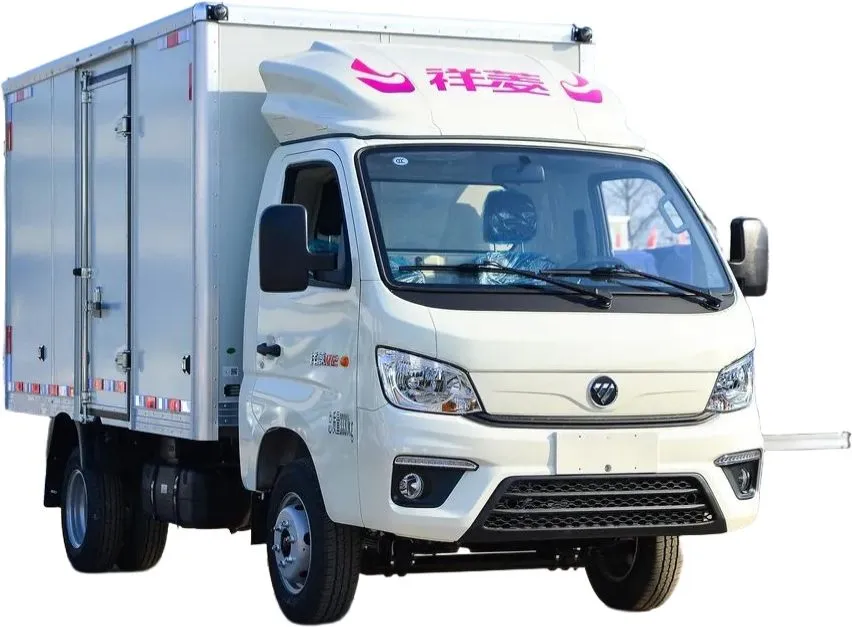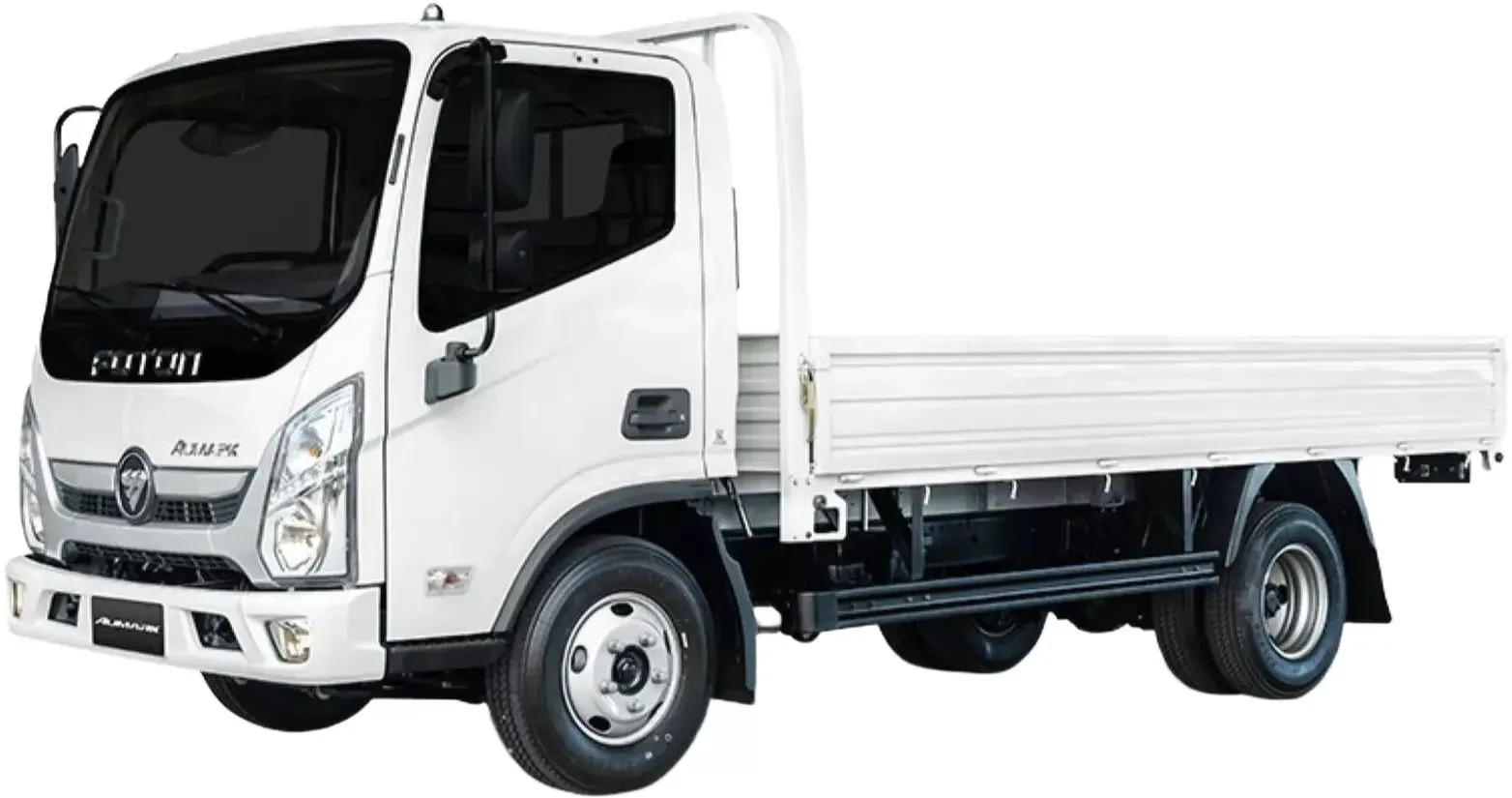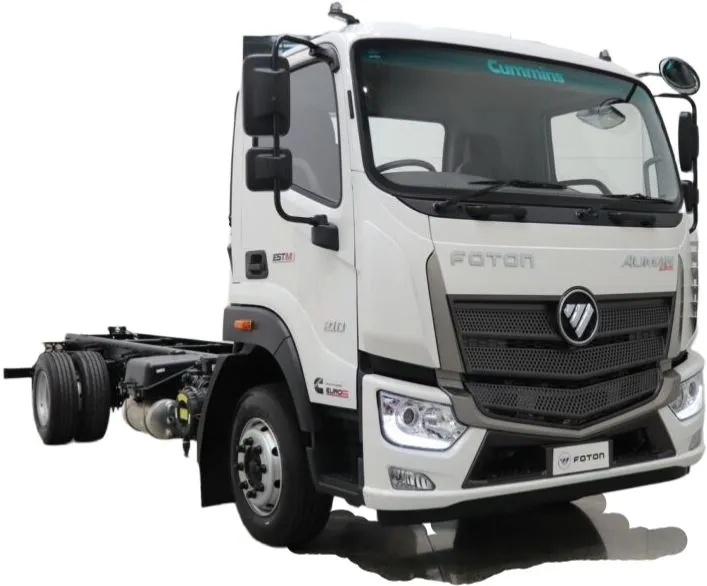
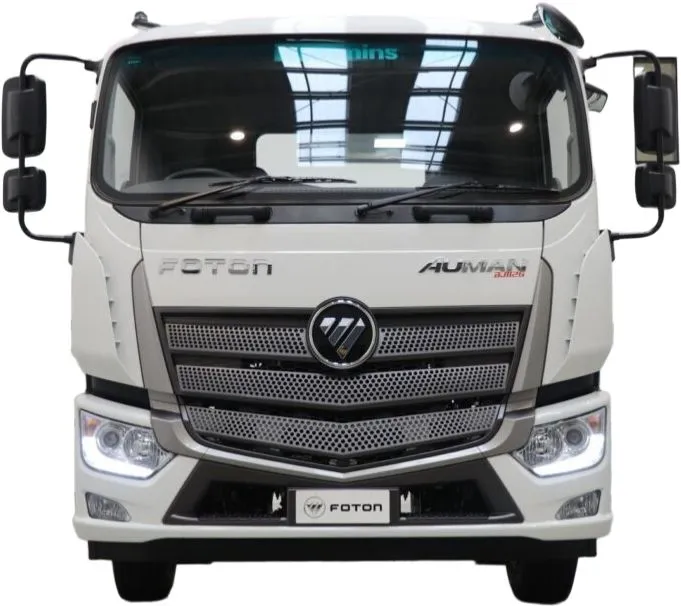
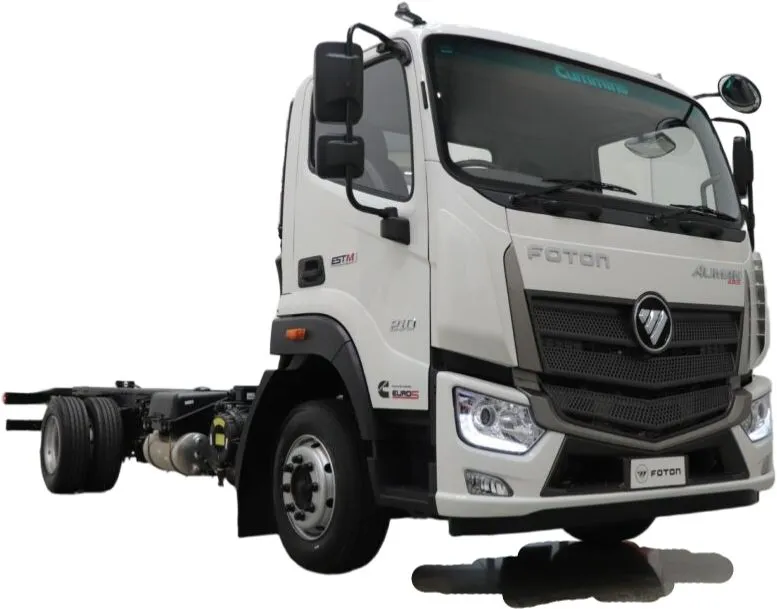
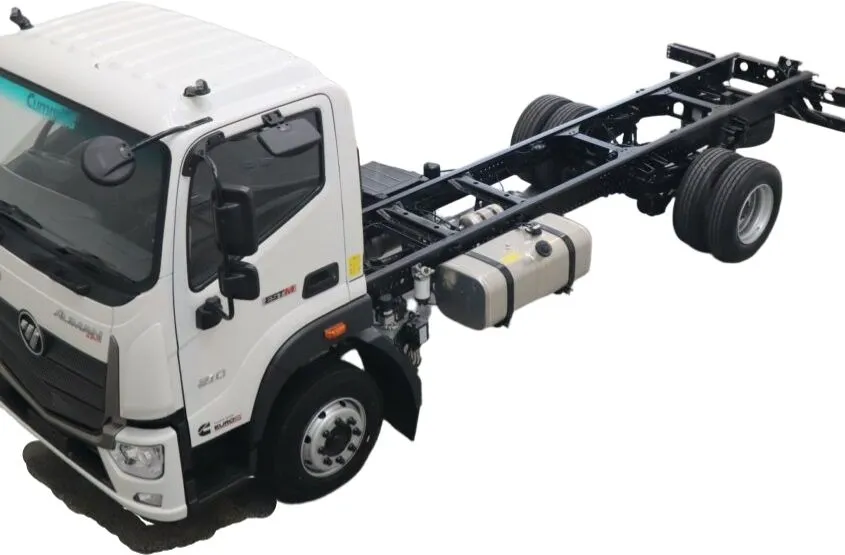


Two trucks can share an engine and still be built for different jobs, and this one shows exactly how. The BJ1186VLPHK-1 is an 18 tonne medium duty cargo truck on the Aumark EST-M platform, prepared for Venezuela, 4x2, left-hand drive, with a 5150 mm wheelbase and a chassis measured at 8800 by 2320 by 2750 mm under a row-and-a-half flat-roof cab for two. Under the bonnet sits the Dongfeng Cummins ISDe245 30, 6700 ml, 180 kW, 950 N·m, at Euro III, driving through a Shaanxi Fast 8JS118TA-B with a 4.556 final drive. The running gear then tells a different story from the heavier end of the range: a 4.2 tonne front axle, a 9 tonne rear, a 234 mm frame section, three leaves at the front with a four-plus-three pack behind, and tubeless 11R22.5 radials. Read as a set rather than as a list, that is a highway and regional-distribution box body truck base, not a site chassis.
The engine is over-sized for this duty, which is its strength here. A 6700 ml in-line six making 950 N·m has to move roughly eighteen tonnes in this configuration, where the same engine family is offered against heavier gross ratings elsewhere on the range, so the work falls on the lower part of the load map. Torque per litre sits at about 142 N·m, a moderate specific loading that marks an engine used within its capacity rather than squeezed for output, and moderate loading is what produces long intervals between overhauls on fuel of variable quality. Euro III rather than Euro V is a deliberate simplification for this market: no urea tank to refill, no dosing module to clog, no catalyst substrate exposed to the sulphur and water content that distant fuel distribution can carry, and no emissions derate interrupting a delivery round. The exposure is regulatory and it is real, since a Euro III unit will not qualify where registration or renewal inspection tightens, so confirm acceptance before ordering.
The gearbox separates this build from the heavier variant, and the difference is not cosmetic. It carries a Shaanxi Fast 8JS118TA-B, an eight-speed case whose model number places it in the 118 torque class in Fast nomenclature, a rating above the 105 class case fitted to the 22 tonne model, and the transmission is completed by a numerically quicker 4.556 final drive. Eight ratios cover both ends of the operating argument, the low steps moving a laden vehicle off a dock and the upper steps holding a steady engine on the trunk, while the quicker axle ratio relative to the heavy variant points at road speed rather than at grade crawling. The record lists no transmission type, ratio spread or power take-off for this build, so those items belong on the order sheet rather than in assumption. Fast cases of this family are iron-housed, cheap to rebuild, and stocked across the region.
Mass rating demands the closest reading, because the numbers in the record do not agree with each other and the gap is tighter than on the heavier variant. Front axle 4.2 tonnes plus rear axle 9 tonnes is 13.2 tonnes of published capacity against a gross vehicle weight of 18000 kg in the same table, a shortfall of 4.8 tonnes. Both cannot bind, so resolve it against the completed-vehicle certificate for the exact approved variant before commissioning a body. The practical consequence stands either way: the 9 tonne drive axle governs, because on a 4x2 it carries the majority of laden mass once a long body is fitted, and a heavy steel van plus dense freight overloads the drive end well before a weighbridge reads eighteen tonnes. Overload there shows as spring-seat fatigue, hub and bearing heat, rapid drive-tyre wear and a rear that steps out first on wet paint or spilled diesel. The 4.2 tonne steer rating is the other half of the message, limiting how much cab and front structure can be added and confirming the on-road bias of the whole design.
Suspension and frame confirm that bias, and they also define what this box body truck is good at. The rails are a 234 mm channel, a duty-grade section rather than the deeper heavy profile used on the bigger variant, and the packs are light: three leaves in front, a four-leaf main stack with a three-leaf helper behind. That helper arrangement is progressive, the auxiliary pack engaging only as load arrives so the vehicle rides comfortably empty and stiffens under payload, which suits a distribution truck returning half-laden. A three-leaf front pack is nonetheless a highway specification, matched to a 4.2 tonne steer axle and telling you the engineers expected sealed surfaces and correct pressures rather than kerb strikes and farm gates. Set against a van body it works in your favour, since a 234 mm rail still gives a bodybuilder solid U-bolt clamping length and a panel-sided box adds no leverage the frame must resist. Point the same chassis at cement, block and unfinished ground and that lightness becomes the first complaint of year two.
Wheel specification is the most valuable item on the list and the one foreign buyers most often overlook. Tyres are tubeless radials in 11R22.5, the imperial truck size, seven carried including the spare. Tubeless matters operationally rather than cosmetically: a puncture is plugged through the tread in minutes at the roadside, without prising a bead, without replacing a tube, and without the heat a rubbing inner tube generates on continuous high-speed running. An 11R22.5 carcass is a retreadable tyre, which on a working truck is where operating cost is actually won. A tubeless wide radial in that size is an on-road component, and the intention is plain: kilometres on sealed road rather than abuse off it.
The geometry holds one real decision, and it is overhang. Wheelbase is 5150 mm and overall chassis length 8800 mm, so 3650 mm is shared between a row-and-a-half cab and whatever projects behind the drive axle, which means platform length is planned around the space between the axles at least as much as behind them. The trade favours a buyer who understands it first: a long wheelbase gives an enclosed body a stable, well-supported floor, less tail-end leverage, smoother travel when empty and better distribution between steer and drive, while a modest overhang limits rear-mounted equipment and can shorten the box. So the question is not how long a body fits but whether the commodity fills by volume between the axles, which packaged freight does, or needs a long tail, which bulk freight does.
Four businesses suit this configuration and one is excluded by a single number. The first is a regional distribution truck role, consumer goods, beverages, packaged food, appliances and spare parts moving on scheduled circuits from a national warehouse to town-level outlets, where the route is sealed, the mileage is known and refuelling happens at a depot. The second is palletised transfer work, where tubeless tyres and a stable long-wheelbase platform are the entire job description. The third is retail and wholesale supply behind a curtain-side or van body, where a 2200 mm platform width is pallet-friendly and the cab carries a driver plus a loader. The fourth is general diesel cargo truck duty for a manufacturer moving finished goods, the use that pays for the wind deflector and returns the highest annual utilisation. Beyond those, intercity long-haul at continuous speed is the exclusion, because 200 litres of fuel defines route planning rather than supporting it.
Ownership economics are the reason to prefer this specification where the duty fits, since the same choices that make it lighter make it cheaper to keep. A 6.7 litre Euro III mechanical-era Cummins without aftertreatment has no dosing pump, no NOx sensor ladder and no catalyst to steal, so the failure categories that dominate modern diesel downtime never enter the workshop diary, while the parts that do wear, linings, springs, shackles, clutch plate, belts, filters and wheel seals, are commodity stock. Retreadable 11R22.5 casings cut the largest consumable line, and the 4.556 ratio holds fuel burn per tonne-kilometre down on trunk runs. Price three items honestly: a 200 litre tank forces refuelling discipline, drum brakes with no listed auxiliary retarder will be replaced more often on gradient work, and a 9 tonne rear under an eighteen tonne rating leaves less structural margin than the heavier variant, which is why a diesel cargo truck on sealed roads is the right pairing here.
Cab and equipment complete a working rather than a showcase specification: manual air conditioning, an MP3 head unit, central locking with electric windows, and a wind deflector, the last item a fuel-discipline device rather than a styling one. Decide the load envelope before the body, because this truck is bought or lost on payload rather than power. No payload figure appears in the record and none can be derived honestly from it, though the shape of the answer is visible: eighteen tonnes of gross rating minus fuel, two occupants, cab and a 234 mm rail chassis leaves a generous number for the class provided the body stays light, and an aluminium or composite panel box recovers mass a steel van quietly spends. On a 9 tonne drive axle that recovered payload lands where it does most good, while a tail-lift or refrigeration unit on the front face moves mass onto the lighter axle instead.
State plainly what the record does not contain. No payload, body length, cargo volume, kerb weight, fuel consumption, range, gradeability, turning circle, ground clearance or maximum speed is published and none is claimed here, with effective payload available only from the certificate for the exact approved variant. The 4.2 plus 9 tonne axle sum against an 18000 kg gross rating is a genuine inconsistency to resolve with the manufacturer before a body is ordered, not a rounding difference. No auxiliary brake, transmission type, power take-off, stability control, air suspension or sleeper is listed, and no warranty, service interval or after-sales network commitment appears, so none is implied. Verify Euro III acceptance against current Venezuelan registration rules for your ownership period, then send the laden cycle distance, altitude profile and body drawing so this medium duty cargo truck can be confirmed against the numbers that decide whether it earns, with a regional distribution truck duty that fits the 200 litre tank identified before order rather than after arrival.