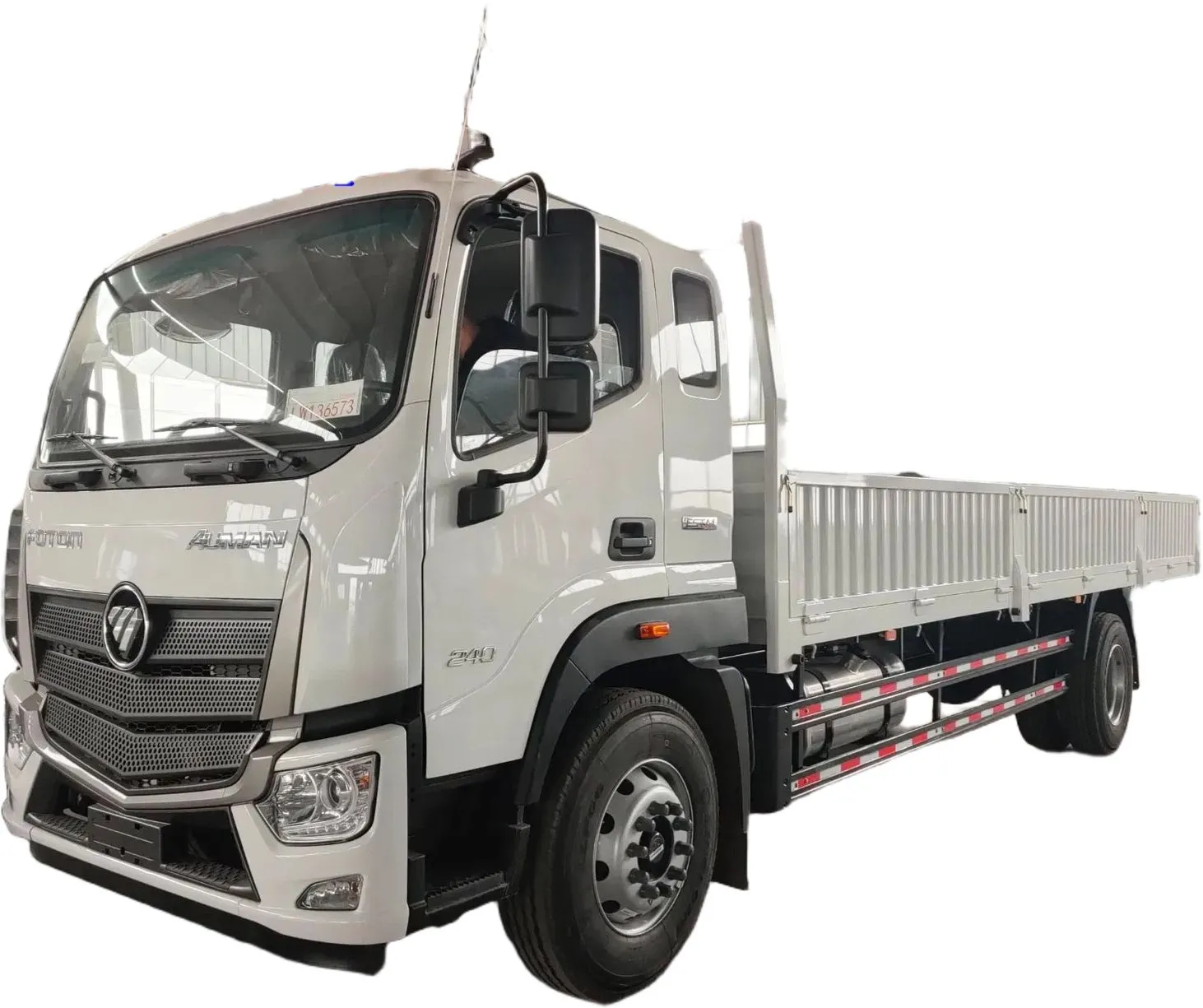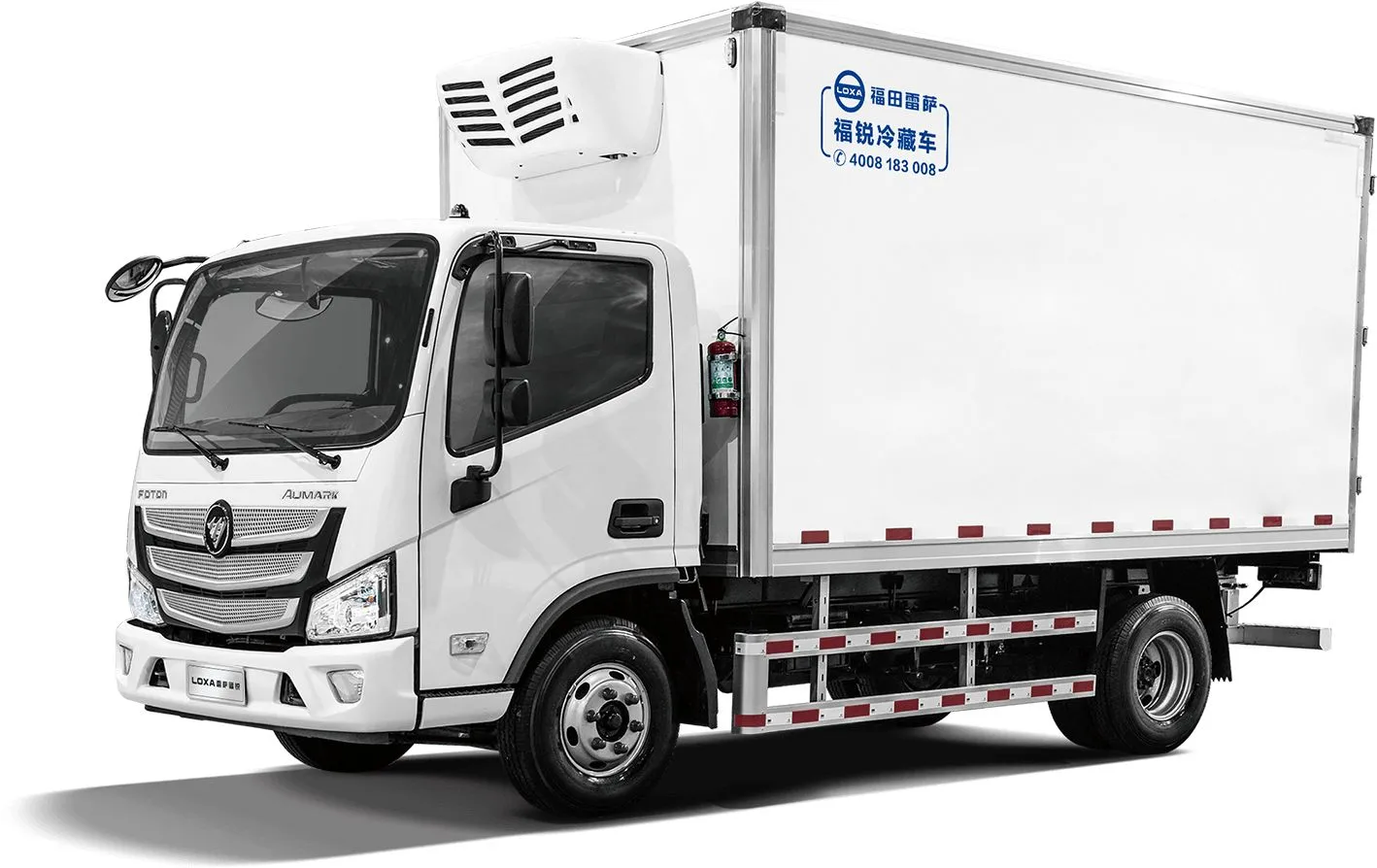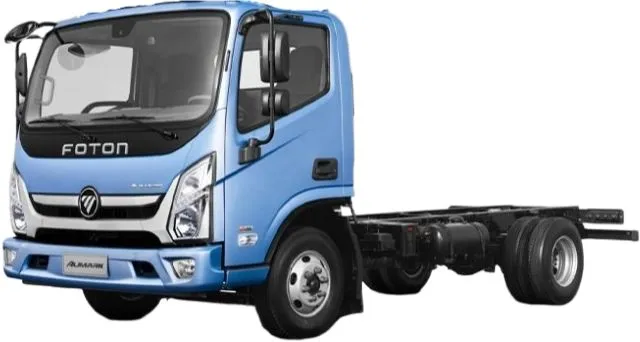
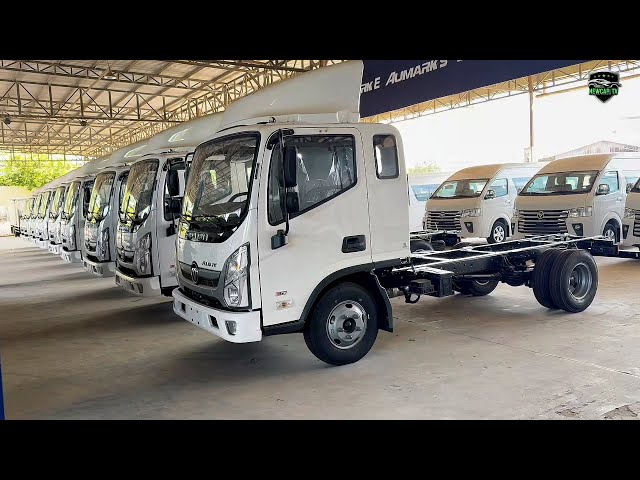
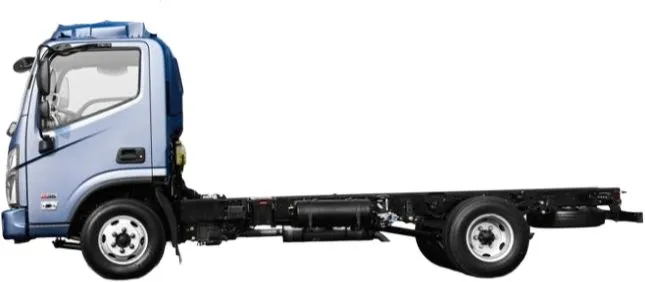


The Aumark E BJ1108VGJEA-F is a practical 10 ton truck chassis designed for operators who need a dependable medium-duty platform that can be adapted to different cargo bodies. Its 4x2 drive layout, 3800 mm wheelbase and 6875x2270x2345 mm chassis dimensions provide a balanced foundation for local delivery, construction support, agricultural transport and regional freight work. The chassis carries a listed GVW of 10000 kg, uses left-hand drive, and is configured with a single-row or extended cab layout for up to three occupants. Instead of prescribing one completed body, this vehicle gives buyers a clearly defined chassis, powertrain, axle and braking package for local body installation.
Power comes from the YC4D140-33 diesel engine supplied by Yuchai. Its 4200 ml displacement produces 103 kW, equivalent to 140 PS, at 2800 r/min, while maximum torque reaches 420 N·m from 1400 to 1700 r/min. The torque band provides a useful operating range for repeated starts, moderate gradients and urban delivery routes where the engine must respond smoothly at changing speeds. The specification does not provide fuel-consumption or acceleration figures, so those values should be established through route testing rather than assumed from the engine rating. The Euro III emission specification should also be checked against the registration and operating requirements of the destination market.
For a medium duty truck chassis, the powertrain needs to be assessed as a complete working system. The YC4D140-33 engine is paired with a 6GS46 transmission from Wanliyang, and the drive axle uses a 5.286 ratio. This relatively high numerical axle ratio is a defined specification for the vehicle and should be evaluated together with the final tire size, body weight, cargo distribution, road gradient and route speed. The available data does not identify the transmission control type, so buyers should confirm the final transmission operation and gear configuration in the technical documents before ordering. What is clear is that the engine, gearbox and axle ratio are selected as a commercial chassis combination rather than a passenger-vehicle drivetrain.
The 10000 kg GVW places the BJ1108VGJEA-F in a useful class for operators who require more structure than a light pickup but do not need a larger three-axle vehicle. The front axle is rated at 3.6T and the middle/rear axle specification is listed at 8T. These axle ratings must be checked against the final vehicle certificate and local regulations when a cargo body is installed. Since no completed-body curb weight or final payload is supplied, a legal payload figure cannot be promised from the GVW alone. The correct process is to weigh the completed chassis with its body, accessories, spare tire and operating fluids, then calculate the remaining cargo allowance within the approved GVW and axle limits.
The 3800 mm wheelbase gives bodybuilders a practical working length for a wide range of applications. The chassis overall dimensions are 6875 mm long, 2270 mm wide and 2345 mm high, while the listed body width is 2060 mm. These dimensions provide a clear starting point for designing a flatbed, box body, curtain-side body, tipper or other commercial superstructure. The actual completed dimensions will depend on the selected body, side guards, rear equipment and any local modifications. Buyers should therefore confirm the final body drawing, turning clearance, overall height and axle-load distribution before approving production.
As a diesel chassis truck, the model is suited to procurement strategies that separate the chassis from the local body solution. A distributor or fleet owner can select a body according to the cargo type and regional operating conditions instead of paying for a fixed configuration that may not match the business. A flatbed body may serve building materials and agricultural products, while a box body may support packaged goods and protected distribution. A tipper body could be considered for loose materials, but the body weight and loading method would need separate engineering confirmation. Every conversion must remain within the certified weight, dimensional and axle-load requirements.
The frame uses a 220x70x6 mm section, providing a clearly identified structural base for body installation. The suspension uses non-independent leaf spring arrangements at both the front and rear. The front spring pack has nine leaves, while the rear configuration is listed as eight plus six leaves. This mechanical layout is straightforward to inspect and familiar to commercial-vehicle maintenance teams. Leaf spring suspension also gives the bodybuilder a predictable chassis interface, although the final body mounts, load concentration and cargo center of gravity must be designed correctly. The presence of a strong frame does not permit concentrated overloads or uneven distribution across the cargo platform.
Braking is handled by an air-brake system with drum brakes at the front and rear. ABS is specified in a 4S4M configuration, adding anti-lock control to the commercial braking package. ABS can help reduce wheel lock during hard braking, but its operation depends on correct sensors, wiring, tire condition and scheduled maintenance. The drum arrangement should be inspected according to the service schedule, including linings, drums, air lines and other related components. The available specification does not state the detailed compressor, air reservoir or brake-chamber configuration, so those items should be confirmed if the truck will operate on steep routes or under demanding stop-and-go conditions.
The 8.25R20-16 tire specification uses tubed radial tires in an imperial size, with six road tires and one spare. This tire format is an established commercial configuration and should be matched across the axle positions according to the manufacturer's requirements. Operators should check tire pressure, tube condition, wheel fastening and tread wear before each route. Tire performance is affected by cargo weight, road surface, ambient temperature and driving speed, so no unsupported mileage or service-life promise should be attached to the specification. The 6+1 arrangement gives the fleet a listed spare tire provision, while the final spare-wheel mounting location should be confirmed in the completed vehicle configuration.
The 200L fuel tank provides a defined fuel-storage capacity for route planning. It does not by itself establish the truck's range because fuel use depends on cargo weight, body type, road gradient, traffic, tire pressure, maintenance condition and driver behavior. For procurement, the fleet should compare the 200L tank with the actual daily route and the availability of refueling points. Operators should also include the fuel mass when calculating axle loading and completed vehicle weight. This is especially important for a chassis that will receive different body types, because a heavier body and a full tank can change the available payload and weight distribution.
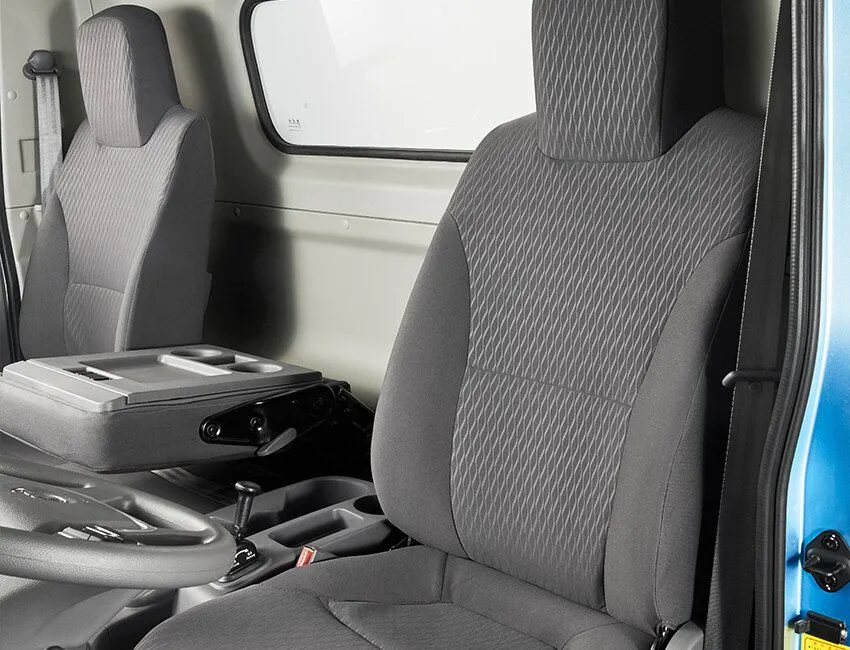
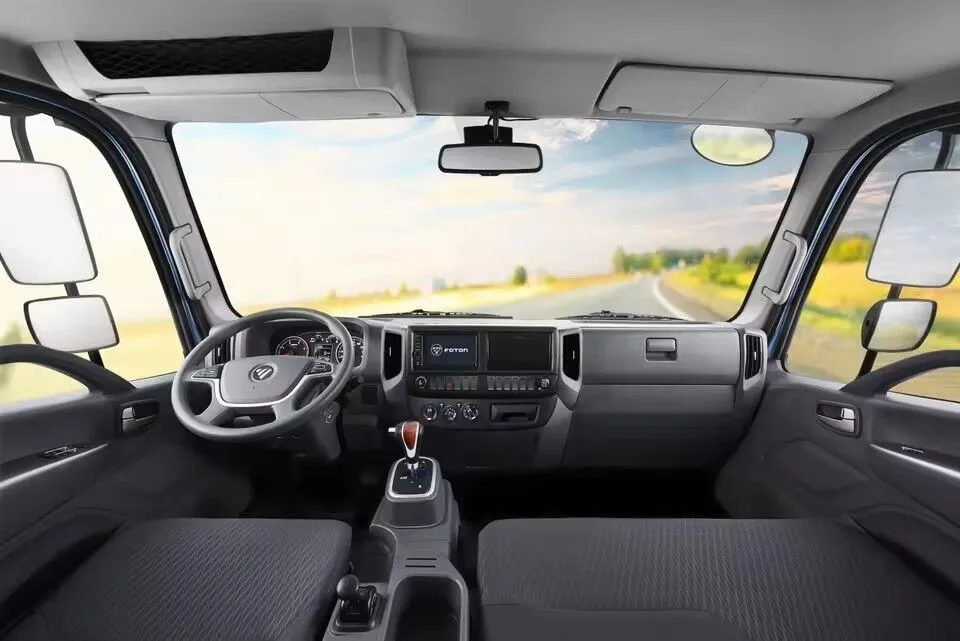
The cabin is specified as left-hand drive with a single-row or extended-cab status and seating for three persons. This gives the operator a choice of cab presentation within the listed vehicle configuration, but the exact delivered cab arrangement should be confirmed in the purchase order. The manual heating system is listed as the cabin climate equipment, so buyers should not describe the vehicle as having factory air conditioning unless a separate confirmed option is added. Interior equipment includes MP3 and Bluetooth functionality, providing basic communication and entertainment support without claiming a higher-level infotainment package.
Door, window and mirror controls are intentionally simple. The specification lists manual mirror adjustment, non-heated exterior mirrors, manual window operation, no central locking and mechanical door locks. This arrangement may be attractive to buyers who prioritize straightforward equipment and easy replacement over luxury convenience features. It also creates a clear procurement checklist: if electric windows, central locking or heated mirrors are required for a particular fleet, they must be confirmed as additional equipment rather than assumed to be included. Transparent configuration is particularly important when multiple vehicle versions share the same platform name.
For a regional distribution truck, the strongest value of this chassis is adaptability. A 4x2 layout and 3800 mm wheelbase can support regular freight movement between warehouses, markets, farms, workshops and construction locations. The single rear drive axle keeps the vehicle configuration simpler than a multi-axle truck, while the 5.286 drive axle ratio provides a specific mechanical basis for evaluating loaded starts and route performance. The model should not be presented as a long-haul vehicle without route and body confirmation, because the supplied data does not include sleeper equipment, cruising fuel consumption or completed cargo-body details.
The chassis can also be considered for agricultural and industrial support roles. A suitable local body may carry produce, tools, packaged materials or equipment that requires more platform area and load structure than a pickup can offer. The final application should determine whether the body needs side access, a roof, a tail lift, a hydraulic system or reinforced loading points. None of those features is included in the supplied chassis data, so they should be treated as conversion requirements. The 10000 kg GVW, 3.6T front axle and 8T rear axle specification remain the basic boundaries for engineering and compliance review.
Maintenance planning is supported by the truck's conventional commercial architecture. The Yuchai diesel engine, Wanliyang transmission, air drums, ABS, leaf springs and tubed radial tires are all clearly identified components that can be placed into a fleet service schedule. Important checks include engine oil and filter service, coolant condition, air-brake system inspection, drum-brake wear, ABS sensor condition, leaf-spring fasteners, frame mounting points, tire pressure and tube integrity. The specification does not provide warranty coverage, service-network information or spare-parts commitments, so those commercial details must be confirmed separately with the supplier.
For buyers evaluating the BJ1108VGJEA-F, the best purchasing method is to begin with the intended cargo and route. Define the body type, estimated cargo density, loading method and daily distance first. Then confirm the completed-body weight, final axle loads and overall dimensions. Check that the Euro III emission level is accepted, that left-hand drive is suitable for registration, and that the manual heating and mechanical door configuration meet the operator's working needs. This process turns a basic chassis specification into a verifiable fleet plan without inventing payload, consumption or performance figures.
Overall, the BJ1108VGJEA-F Aumark E is a flexible 4x2 diesel chassis with a 4200 ml Yuchai engine, 140 PS output, 420 N·m torque, 6GS46 transmission, 10000 kg GVW, 200L fuel tank, air brakes, ABS and leaf spring suspension. Its 6875x2270x2345 mm chassis dimensions and 3800 mm wheelbase provide a practical starting point for several commercial body solutions. The 10 ton truck specification should be finalized through completed-vehicle weighing, body engineering and local compliance review. When matched with an appropriate superstructure, it can serve as a capable regional distribution truck for varied commercial operations.
For fleets seeking a medium duty truck that can be adapted locally, the model offers a clear balance of structure, equipment and configuration transparency. The frame, axle ratings, 9-leaf front springs, 8+6 rear springs and air-brake system give the chassis a defined working foundation. The simple cab equipment, MP3 with Bluetooth and manual controls keep the specification easy to understand and maintain. The final value will depend on how accurately the selected body, cargo and route are matched to the certified limits of the completed vehicle.
As a diesel chassis truck, it should be evaluated on documented facts: YC4D140-33 engine, 103 kW / 140 PS, 420 N·m, Euro III emissions, 5.286 drive axle ratio, 200L fuel tank and 8.25R20-16 tubed radial tires. No unsupported claims about fuel economy, payload or service life are necessary. The final order should record the cab version, body design, equipment options and completed weight. This evidence-based approach gives buyers a reliable foundation for procurement and reduces the risk of discovering configuration limits after delivery.
In commercial use, the vehicle's reliability will depend on operating discipline as much as on the listed components. Keep the completed truck within its 10000 kg GVW, distribute cargo evenly, maintain the air-brake and ABS systems, inspect the leaf springs and frame mounts, and keep the tires at the correct pressure. Confirm every body modification before installation. With these controls, the BJ1108VGJEA-F provides a practical chassis platform for fleets that need a compact, adaptable and clearly specified commercial vehicle.