

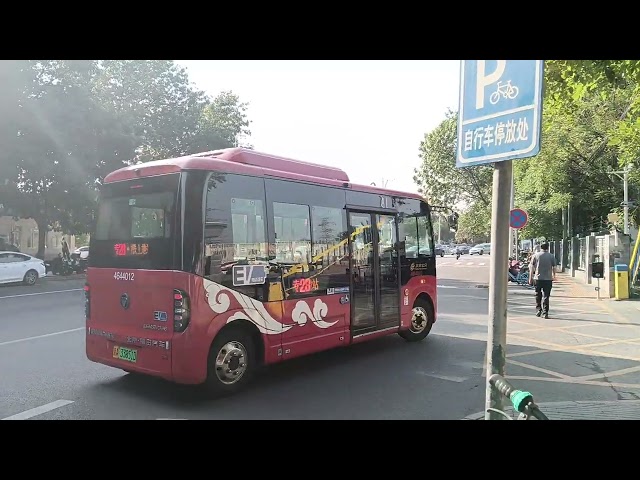


A city bus is not bought for the day it arrives. It is bought for the ten thousand mornings after, when the same driver runs the same round in the same rain and the operator is still paying on a schedule that assumed it would survive. This battery-electric bus was specified with that decade in mind: a 5980 mm low-floor vehicle on a 4360 mm wheelbase, 2080 mm wide and 2930 mm tall, 6500 kg gross against a 4700 kg curb mass, fourteen seats and up to twenty-five occupants, a Foton electric drive bridge rated at 75 kW continuous and 167 kW peak, and 128.06 kWh of EVE lithium iron phosphate energy on the roof. Homologated for Bolivia in left-hand drive, it is a small bus built to a hard brief: corrosion resistance, cold tolerance to minus ten degrees, and a structure that still has years left when the contract is up.
Begin with the body, because it decides whether the other specifications ever get used. The structure is fully load-bearing, a monocoque rather than a body bolted to a ladder frame, and the record states high anti-corrosion requirements for the skeleton with a design service life of up to ten years. That pairing is not accidental: a load-bearing body puts road loads into the panels and skeleton themselves, so that steel cannot be allowed to thin, and the corrosion protection turns ten years into a target rather than a wish. A bus economically scrap at year six is worth far less across its life than one scrap at year ten, and the difference is decided in paint, sealing and steel specification, none of which a buyer sees after delivery. The strengthened roof skeleton carries the same logic inverted: the pack sits on top, so the roof is reinforced for that mass, and the body is engineered as one system rather than a shell with a box added later.
Floor height and footprint do more for daily revenue than any performance figure here. This is a low-floor vehicle, so passengers step in rather than climb, and the payback is measured in seconds per stop multiplied by every stop on the route. A wheelchair, a pushchair, a trolley of bags and an elderly passenger in the rain all board at kerb level, and that one detail decides whether a service is usable by the public or only by the agile. The turning radius is no more than nine metres, which in a dense old town lets a bus reverse into a confined terminus or take a corner where a longer vehicle needs three attempts. Overhangs are short at 850 mm front and 770 mm rear, with approach and departure angles of eighteen and twenty-five degrees. Those numbers work together: they keep the bus off the ground on a steep kerb ramp, a broken apron or a wash-out, which is how a low-floor vehicle survives a city whose road maintenance lags its traffic. Ground clearance of at least 120 mm fully loaded confirms the intent. This is a bus expected to use the same holes everyone else uses.
Mass discipline is where a small electric bus succeeds or quietly fails. Against a 4700 kg curb weight the gross is 6500 kg, leaving 1800 kg for passengers, driver and equipment, and twenty-five occupants sits close to that allowance, so seating, standing provision and added equipment must be specified together. The record lists fourteen seats and a 9+1 seating figure against maximum occupancy of 25, a distinction to reconcile with the exact configuration and destination registration before committing to a timetable. That is not a flaw in the sheet; it is the conversation a serious buyer should insist on before pricing an intercity feeder bus timetable on the higher of the two numbers.
The drivetrain answers the acceleration and grade question directly. The motor is a permanent magnet synchronous machine built into a Foton electric drive bridge, model FTTBP165A, rated 75 kW continuous with 167 kW peak, and 160 N·m rated against 410 N·m at peak. Integrating the motor into the drive axle removes the propshaft and multi-speed gearbox: no clutch to burn on a hill, no transmission to flush, no driveline noise rising into the saloon. Torque is there from zero revs, and 410 N·m lets a full bus pull away from a kerbside stop without hesitating, then climb a ramp a loaded diesel takes in a lower gear with smoke. Gradeability is stated at no less than fifteen percent and maximum speed at 90 km/h, placing the vehicle in urban and peri-urban service: quick enough to hold a ring-road schedule, geared for the stop-start duty it performs all day. The record notes common speed of 40 to 60 km/h, the number to plan the battery around rather than the top speed.
The energy system is conservative chemistry in a large quantity: EVE lithium iron phosphate at 128.06 kWh. A bus of this class has enough stored to cover a duty day with reserve, and LFP is chosen because it accepts daily full charging, ages more slowly in heat and is thermally more stable, the right profile for a vehicle carrying the public. Roof mounting keeps the pack out of the saloon and off the floor, protected from flood water and kerb strikes, leaving the low floor genuinely flat, and the strengthened roof skeleton exists because that mass had to go somewhere. Charging parameters are not published in the supplied record, so no inlet type, connector standard, charge time or range figure is quoted here. Those must be confirmed against the final build, because 128 kWh on an overnight depot charge and on daytime opportunity charging are two different operating models.
Climate and refinement complete the case for the people who use the vehicle. Interior noise at fifty kilometres per hour is limited to 70 dB(A), achievable only because there is no diesel at the rear and no gearbox whine through a propshaft; a quiet bus is one passengers choose over a taxi and one a driver will still be working in two years. Heating comes from two PTC electric radiator units, and parts are specified for temperature resistance down to minus ten degrees, which is no decoration: PTC heating draws from the same pack that moves the vehicle. Glazing is single layer at doors and side windows, the driving recorder is to European standard, and braking distance at thirty kilometres per hour fully loaded is designed to standard requirements rather than to a marketing number.
Where does a bus like this earn its keep? The first and largest market is urban transit. An electric city bus of just under six metres fits routes that never justified a twelve-metre vehicle: the frequent circular through a historic centre, the feeder from a residential district to a rail or cable station, the night network where half a dozen passengers a trip is normal. Authorities increasingly write zero-emission and low-noise requirements into tender documents, and a battery-electric vehicle of this footprint meets the environmental requirement without the operating penalty of a full-size bus on a route that cannot fill one. The second is the intercity link: an intercity feeder bus running from a town to a highway junction, a regional capital or an airport, where the 90 km/h capability matters, the low floor speeds the exchange at every small stop, and fifteen percent gradeability covers the approach roads mountain corridors are made of. Bolivia's geography makes that duty normal rather than exceptional, and altitude, cold nights and long approach gradients are exactly what a school student shuttle has to survive on the same roads every weekday morning.
The third is institutional transport. A school student shuttle is judged first on safety, then throughput, and this vehicle answers both: no exhaust accumulating where children queue, a quiet cabin supervisors can talk in, glass straightforward to replace after the inevitable stone, a recorder on board for incident evidence, and a low floor that lets a child climb in unaided. Twenty-five occupants covers a class, and the short overhangs let the bus reverse into a yard with a wall behind it. The fourth is industrial and remote-site personnel movement. A camp shuttle needs corrosion resistance because the air is hostile, cold tolerance because night temperatures fall, generous angles because the camp road is not asphalt, and torque from standstill because it starts every shift with a full load of people going on it. Every one of those is on this sheet, and it is why a mining camp personnel shuttle contract is won on specification rather than on price alone. The fifth, and the reason an electric city bus appears in so many modern fleet plans, is cost per kilometre: a driveline with no oil change, no filters, no belts, no aftertreatment and almost no brake wear halves the maintenance budget, and that is what lets a municipality run the same routes with fewer vehicles or a private operator bid a fare the public will actually pay.
Buyers should read the limits as carefully as the strengths. This is a 5980 mm bus, and fourteen seats plus standing is a defined capacity; a route moving crowds at peak needs more doors, more floor or more vehicles. Range, charging power, connector standard and inlet count are not in the supplied record and are claimed nowhere above, and 128.06 kWh is only an answer once duty cycle and depot infrastructure are known. Braking and gradeability are expressed as compliance with standard requirements, not as test results on a specific surface. Registration class, standing capacity and import documentation for Bolivia are set by the destination authority, and seat and occupancy figures must be reconciled against the certificate for the exact build. No warranty, service network or after-sales term appears in this data, so none is implied. Supply the route length, daily kilometres, the steepest stop on the round and the charging window at the depot, whether the duty is a mining camp personnel shuttle or a municipal circular, and the bus is confirmed against those numbers rather than a brochure.


