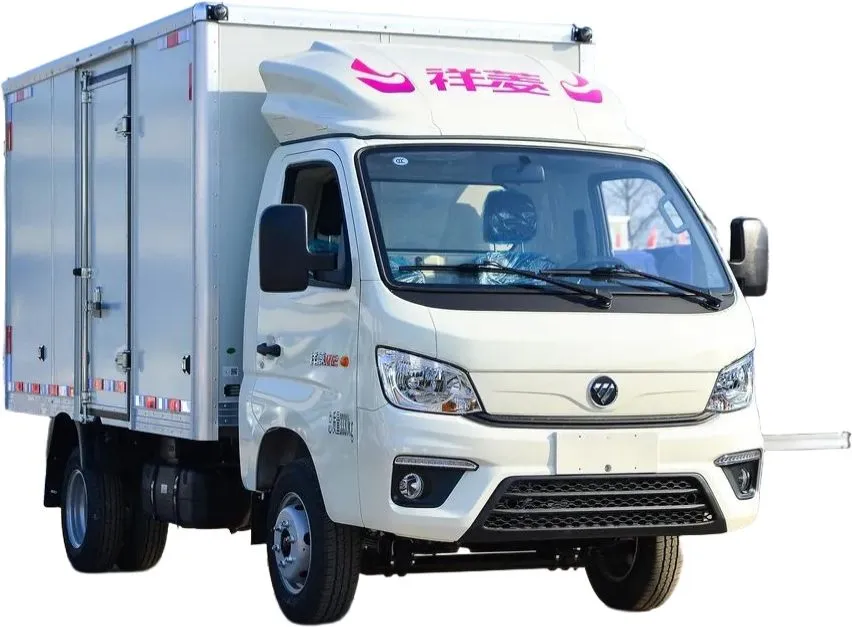
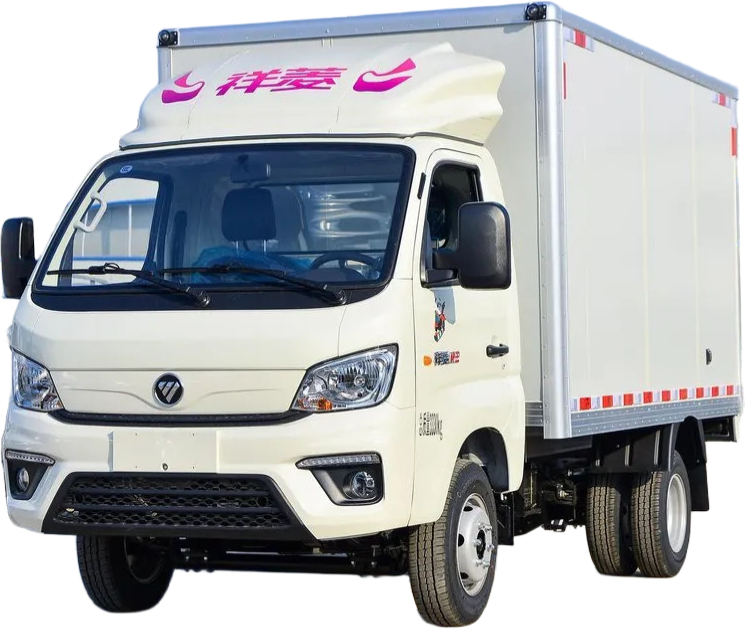
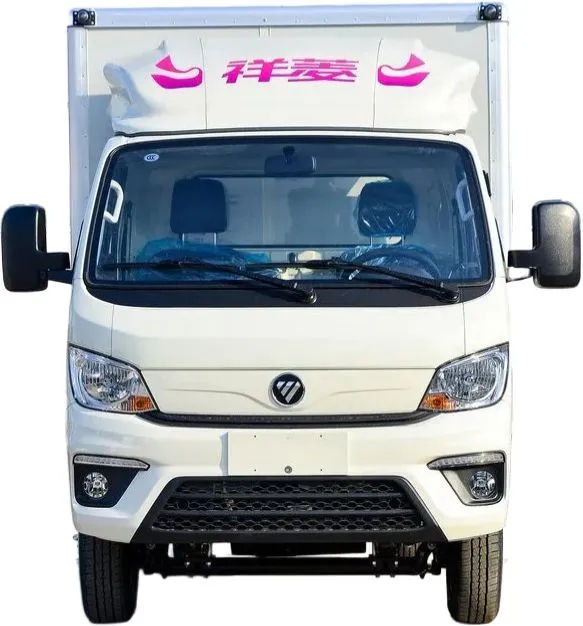
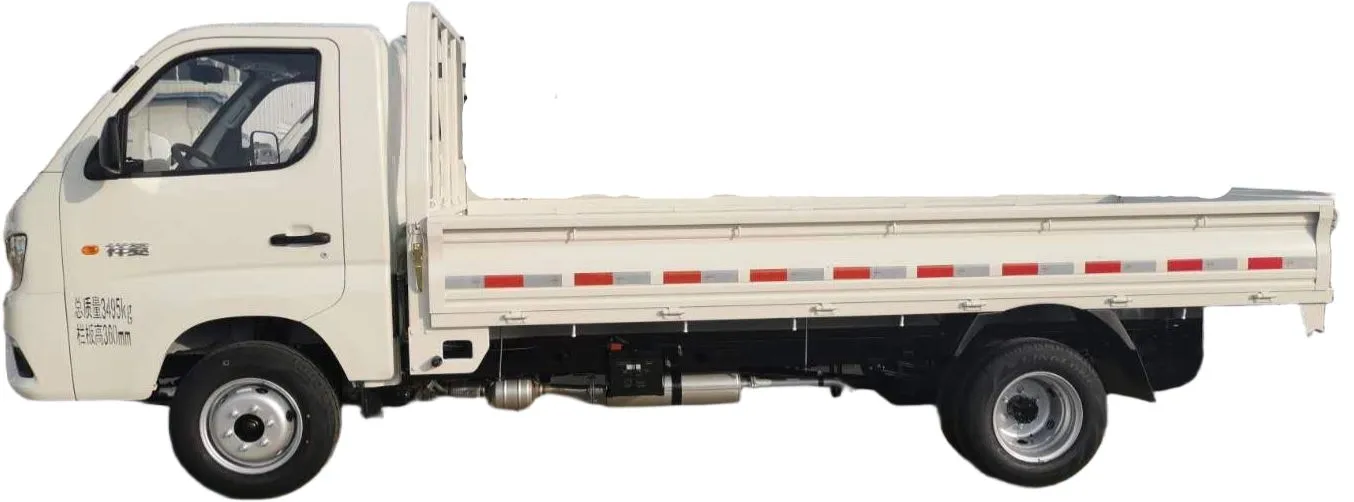
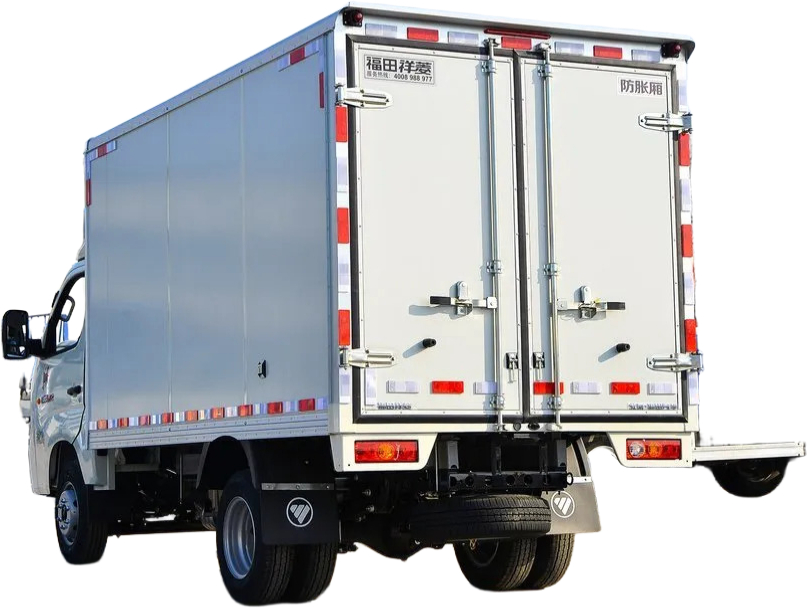
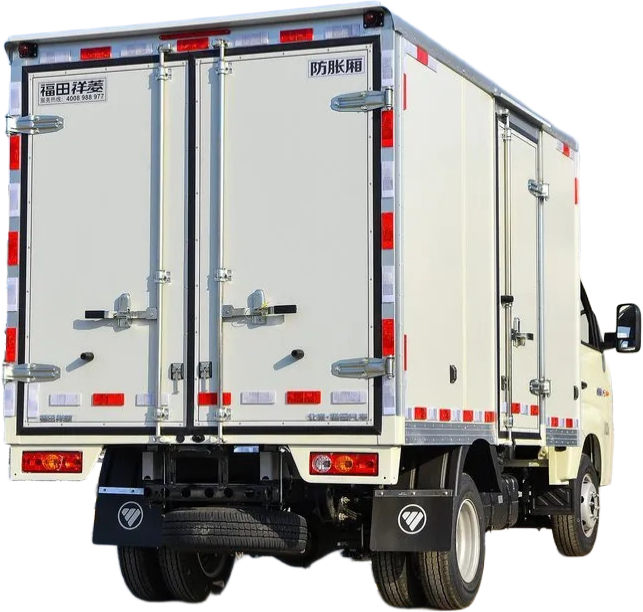


A mini truck in Lagos, Kano or Port Harcourt is not judged on a brochure. It is judged at the third year, on a road with no centre line, carrying a load the seller never planned for, in heat that bakes the cabin and dust that finds every air filter. The BJ1030V5JV5-AR Xiangling M2 is specified for that assessment rather than the first one: a 3.5-tonne-class light duty cargo truck on a riveted-and-welded ladder frame, the body-on-frame TM2 platform rather than the unibody of lighter models, with a 2850 mm wheelbase, a Harbin Dongan 1.498-litre petrol engine, a 2.5-tonne integral banjo rear axle at 5.375 final drive, and a payload just over 1.8 tonnes on a 3300 mm flat body. Approved for export to Nigeria at Euro II, with a high-mounted air intake and a steel shield under the tank, this build answers West African roads rather than a European test cycle.
The first decision worth understanding is construction, because everything else follows from it. The frame is riveted-and-welded ladder type, outer width 770 mm forward and 620 mm rear, side rail sections 82 mm forward, 130 mm mid and 82 mm aft. That is a separate chassis with cab and body mounted on it, the older and heavier solution, and on this duty the correct one. A unibody puts load into its panels, superb on sealed roads and unforgiving where the surface moves; body-on-frame lets the road twist the axles independently of the cab, takes a third-party body on bolts and U-bolts rather than welded brackets, and, decisively where repairs are hammered and patched, can be straightened or replaced section by section without scrapping the vehicle. The trade is mass, and the numbers are honest: bare chassis 1255 kg against 3495 kg gross, flatbed 1530 kg against 3460 kg.
The engine is a Harbin Dongan DAM15L, 1.498 litres, 82 kW, 142 N·m, twelve-volt electrics, multi-point electronic injection, electronic cooling fan, and a single dry diaphragm-spring clutch of 200 by 130 mm with hydraulic actuation driving a DAT18R manual gearbox. Those figures are modest, and enough, because a flatbed mini truck running short heavy cycles needs not horsepower but the ability to pull away loaded, repeatedly, without cooking a clutch. That is bought through gearing rather than engine size, and the gearing here is aggressive: a 5.375 main reduction ratio, short for this class, so a vehicle with 1800 kg behind the cab starts on an unsealed gradient and creeps through a market crowd in a middle gear without riding the clutch. The cost is revs at speed and a 110 km/h maximum, the right trade for a duty of kerbside stops rather than highway kilometres. Nothing in the driveline is exotic, nothing needs a scanner, everything is sized for abuse.
Axle specification carries the same thinking. The front is a non-disconnectable circular tube beam, 70 mm diameter by 8 mm wall, rated 1.5 tonnes with a 102 mm drop; the rear is the BJ121 integral banjo axle rated 2.5 tonnes with an 85 by 75 by 6 mm section, the banjo form being the older, simpler, cheaper design where the tube passes over the differential. Suspension is leaf springs throughout, three leaves at the front and a five-plus-two helper pack rear, with tubular shock absorbers and no anti-roll bar. Steering is recirculating ball with hydraulic power assistance, the heavy-duty architecture rather than the rack and pinion of car-derived vans, chosen for reasons a driver appreciates: it absorbs kickback from potholes, it is adjusted rather than replaced when knocked out of alignment, and the assist keeps a loaded vehicle steer-able at parking speed. Braking is hydraulic with vacuum assistance, disc front and drum rear, a load-sensing proportioning valve on the rear circuit and a central drum parking brake. That valve is what many mini trucks omit, and it is not decoration: as the rear goes from empty to nearly two tonnes it reduces pressure to the drums so the laden axle cannot lock first and swing the vehicle sideways on wet sand. Tyres are 185R14LT tubeless metric, the LT rating denoting reinforced light-truck carcass for this payload.
The changes introduced on this build tell you what the engineers expected to kill the truck in the field. Against the previous overseas version, the air intake was moved from low to high position and a steel plate guard was added under the fuel tank. A high intake breathes above the dust cloud the vehicle raises, which is the difference between cleaning a filter element weekly and wearing an engine out by inhaling laterite dust through the throttle body. The tank shield stops the stone strikes, kerb impacts and driveway aprons that puncture an unprotected tank at the lowest point of the chassis. Neither change adds power or photographs well; both lengthen the interval between a repair that ends a working week. This is a last mile delivery truck built as if it had already been driven on the roads it is sold to.
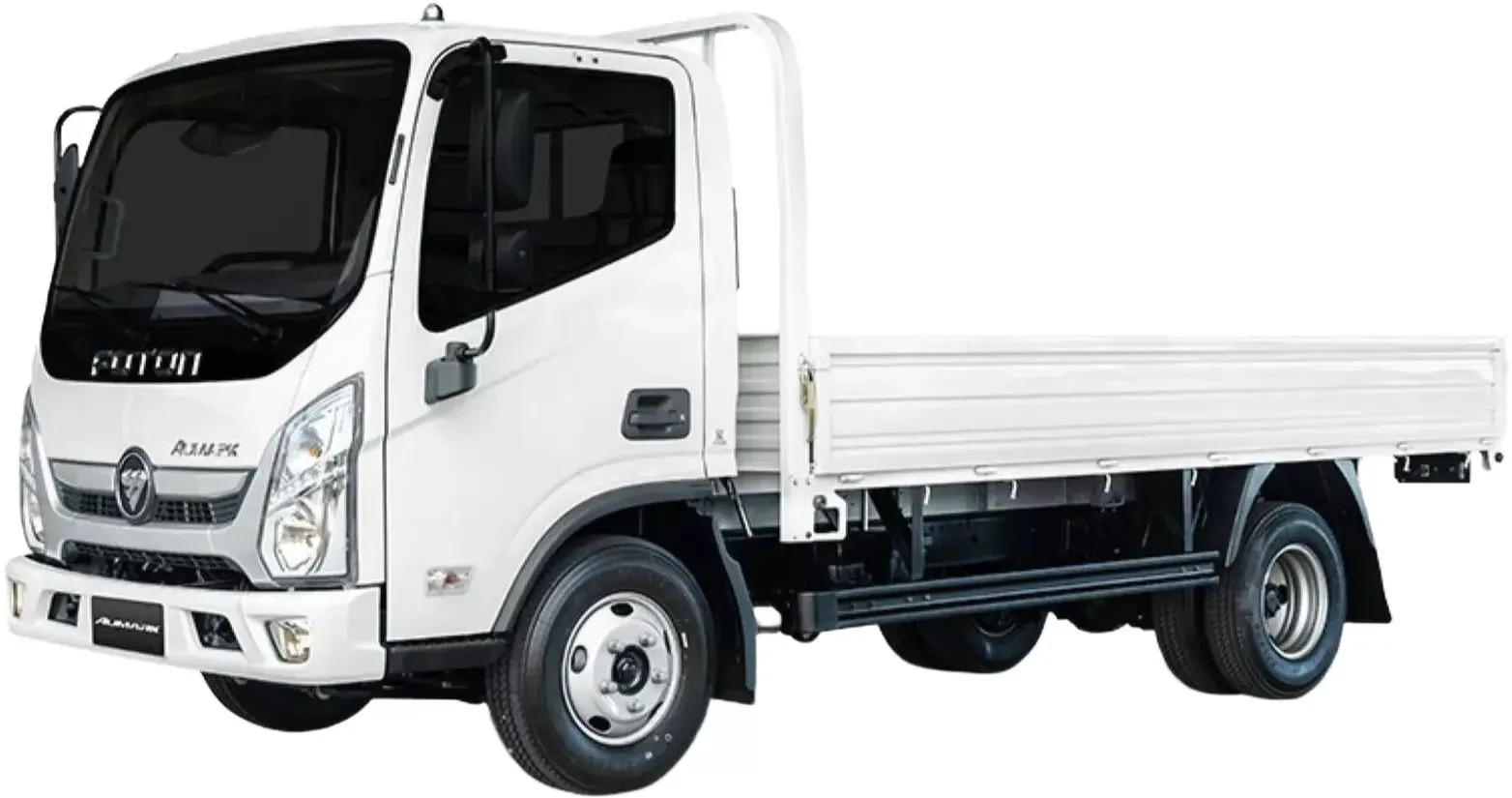
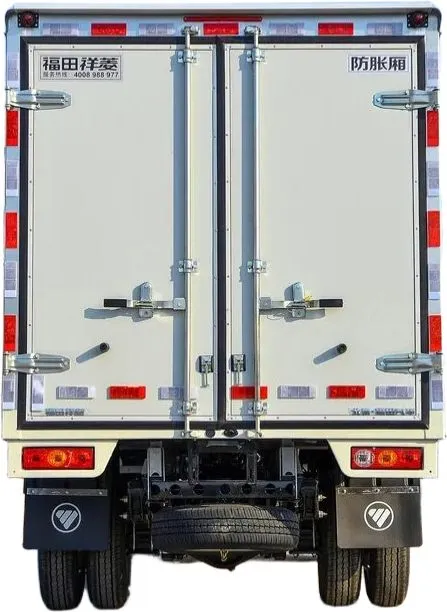
Capacity and dimensions decide which contracts the vehicle can take. Flatbed form measures 5150 by 1830 by 1995 mm with a 3300 by 1710 by 360 mm deck, roughly 5.6 square metres of floor carrying 1800 kg with two occupants at 1530 kg kerb and 3460 kg gross. Box form measures 5220 by 1850 by 2625 mm with an internal 3300 by 1710 by 1700 mm compartment, close to 9.6 cubic metres enclosed, carrying 1495 kg with two at 1705 kg kerb on 3330 kg gross. The bare chassis is 5005 by 1725 by 1925 mm with no payload stated, and deck height is 875 mm. The enclosed body costs 305 kg of payload and buys weather protection, lockable security and stacking height, an exchange every buyer prices against their own cargo: freight that fills by volume favours the box, while dense loads of tinned goods, cement or tile favour the open deck.
The vehicle earns in four separate businesses. The first is urban distribution, the classic last mile delivery truck job, where beverages, food, household goods and parcels move from a wholesaler to dozens of small outlets in a day, each hand-loaded at the door, and where a lockable box, a low deck, power steering and a short wheelbase decide stops per hour. The second is fresh produce and general trade, where a flatbed mini truck with three-side-opening gates is the standard tool: produce, cassava, tomatoes, grain sacks and livestock are loaded by hand from three directions, need no climate protection, and are priced per trip in a market where a vehicle that cannot reverse into the loading lane does not get the load. The third is building materials, cement, rod, block, sand and fittings, the dense freight where the 1800 kg flatbed figure is the entire argument and where the riveted frame, banjo axle, five-plus-two rear springs and 5.375 ratio decide profitability in year four.
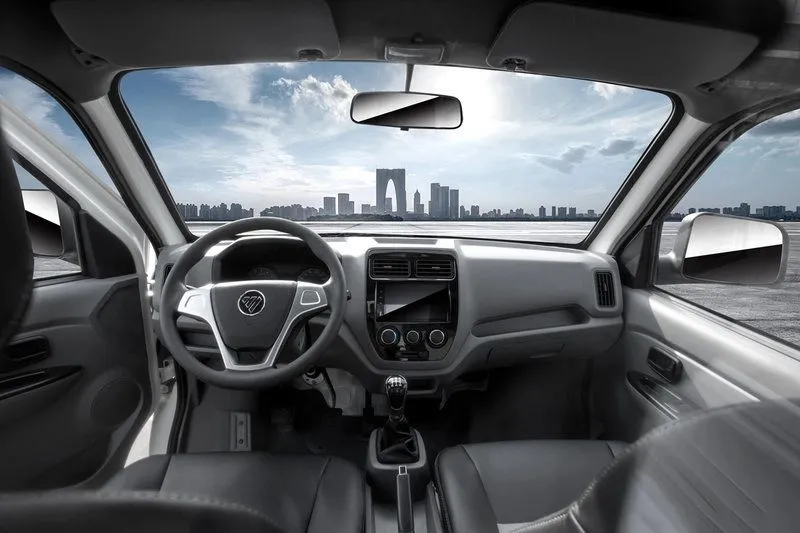
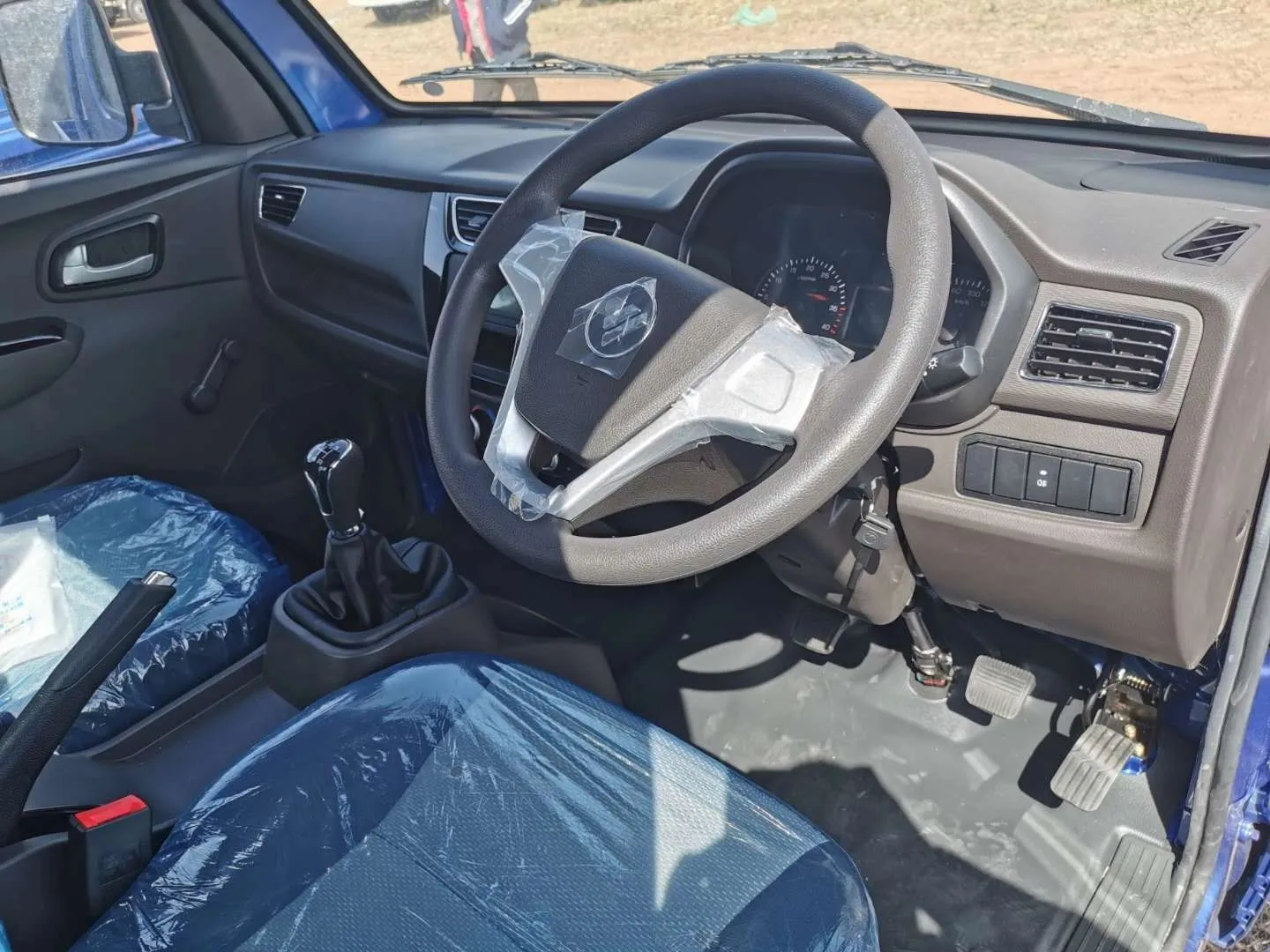
The fourth case is rural and peri-urban, where a rural utility truck becomes a farm's transport, a clinic's supply link and a trader's vehicle in the same week. That use is exactly what the two build changes protect, since a high-mounted intake and a shielded tank are the specification of a vehicle expected to leave the asphalt, and any rural utility truck that must also cross a flooded culvert or a laterite ramp on schedule is relying on those two items more than on anything in the cab. This class also sits under most jurisdictions' ordinary licence thresholds, which widens the hiring pool, and the 185R14LT size is stocked across West African tyre markets, which decides downtime more reliably than any service promise. Options for operators wanting more: leatherette seats, a manual air conditioner, an MP5 head unit, a wind deflector, and a choice between three-side-opening flat bodies with anti-slip or corrugated floors and the OEM plug-in panel box. Air conditioning is not standard, and in this climate that decision belongs to the route, not the price.
What separates one light duty cargo truck from another at year three is ownership economics, and here they are ordinary by design. A 1.5-litre multi-point petrol engine has no high-pressure diesel injection to commission, no injector calibration tool, no particulate filter, no dosed additive and no glow-plug circuit, and this injection system is not the sensitive common-rail architecture that punishes poor fuel. Filters, belts, brake shoes, clutch kits and leaf shackles are the consumables list, and the steering box is adjusted on the vehicle rather than replaced as an assembly. The discipline this build demands is fuel cost and descent planning: a small petrol engine under heavy load at 5.375 turns consumes more per kilometre than a diesel of equal payload, and with no auxiliary braking fitted, a long downhill run at gross weight is taken in gear rather than on the brakes alone.
State plainly what is not claimed. Cargo volumes above are derived from internal dimensions published in the record; no fuel-consumption figure, range, turning circle, ground clearance, gradeability rating or body tare allowance appears in the supplied data, so none is stated. The header lists GVW as 3.5T while the mass table records gross masses of 3495, 3460 and 3330 kg by body, and payload is published for the flatbed and box variants only, so registration mass for a locally built body must be confirmed against the certificate, not the header. The engine is documented at China Stage V while the vehicle is approved at Euro II with no three-way catalytic converter, a deliberate calibration and exhaust difference meaning the two levels are not interchangeable for registration. No airbag, driving assistance, driving recorder, stabilizer bar or power take-off is fitted as standard, no stake-body approval is listed, and no warranty or service term appears in the record. Give us the body, the heaviest load, the roads you actually drive and the Nigerian registration class, and the BJ1030V5JV5-AR is confirmed against those figures rather than a brochure.