Writer:Alan Chen(Foton Auman dealer)
A distribution fleet manager in Venezuela is not short of problems. He is short of trucks that can legally carry a full city load, turn inside a street that was never designed for a 22-tonner, and still be cheap enough per unit that a breakdown does not take a whole route out of service. Those three requirements pull in opposite directions, and most of the buying mistakes in this segment come from optimising one of them and discovering the other two on the first Monday of operation.
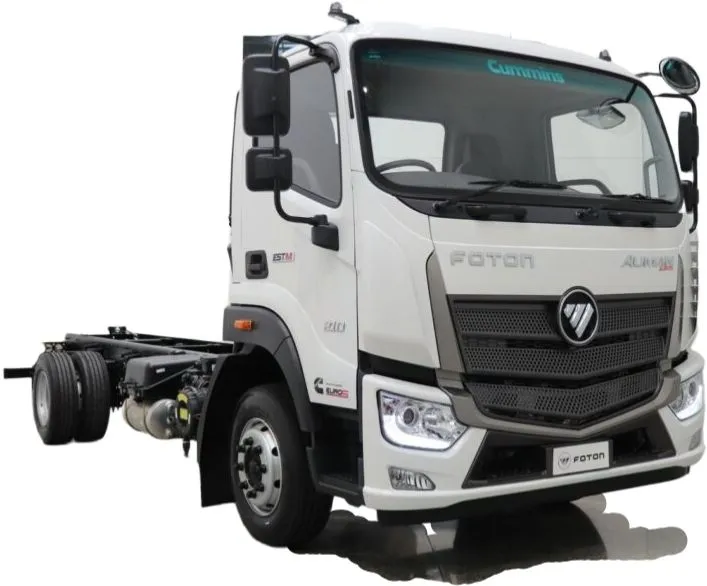
This article is about one truck and one job only: urban and regional distribution. The Foton Aumark EST-M 22 T 4×2 is the single listing configured for this work, so rather than comparing badges we are going to take the specification apart line by line and work out what it does and does not give you. Every figure below comes from the table published with the listing. Where the listing contradicts itself, that is flagged rather than smoothed over.
The declared GVW is 22,000 kg, split between a 5.5-tonne front axle and a 10-tonne middle/rear axle. Add those together and you get 15.5 tonnes of rated axle capacity against a 22-tonne gross figure, which is normal for this class — the gross rating is a legal and structural number, not the sum of the axles, and there is no GCW field on this listing at all. There is no trailer rating here; this is a rigid truck and it should be specified as one.
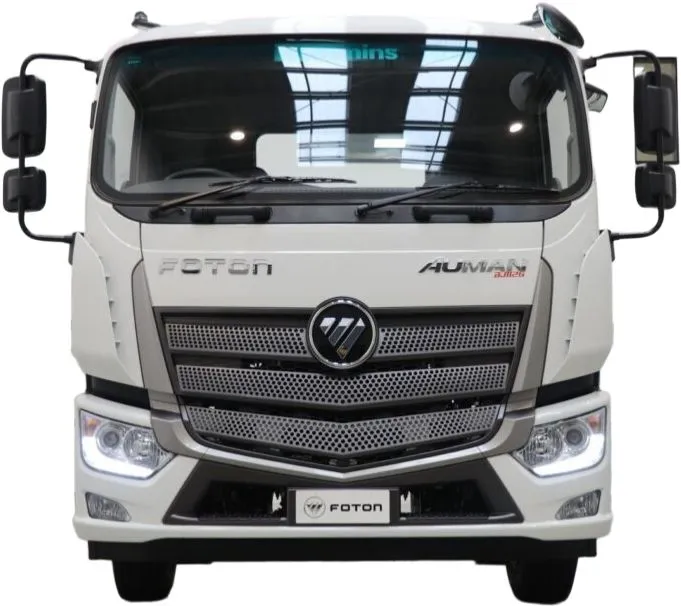
The dimensions are what make it a city truck. Overall chassis length is 8,560 mm on a 4,800 mm wheelbase, width 2,468 mm and height 2,780 mm. Under nine metres long and under two and a half metres wide is the envelope that lets a driver use a normal street, a normal roundabout and a normal loading bay without a special permit. Note the ratio: a 4,800 mm wheelbase inside an 8,560 mm body leaves roughly 3,760 mm of overhang front and rear combined, which is what gives you the body length without stretching the turning circle.
The listing gives internal cargo box dimensions of 6,500 × 2,400 × 600 mm. Multiplied out, that is 9.36 m³ of nominal load volume on a 6.5-metre floor. For a distribution fleet that is a useful way to think about the truck: you are buying 6.5 metres of floor length and 2.4 metres of internal width, and if your product is palletised you should plan the layout against those two numbers, not against the tonnage badge.
Here is the thing to query. The same listing states the body width as 2,200 mm and the internal cargo box width as 2,400 mm. A box cannot be wider inside than the body it is mounted on. One of those two figures is wrong, or they are measuring different things — the cab width against the box width, for example. Before you design a pallet layout or a racking system around 2,400 mm, get the actual internal width confirmed. On a distribution truck, 200 mm of internal width decides whether you run two pallets side by side or one, and that halves or doubles your drop count per shift.
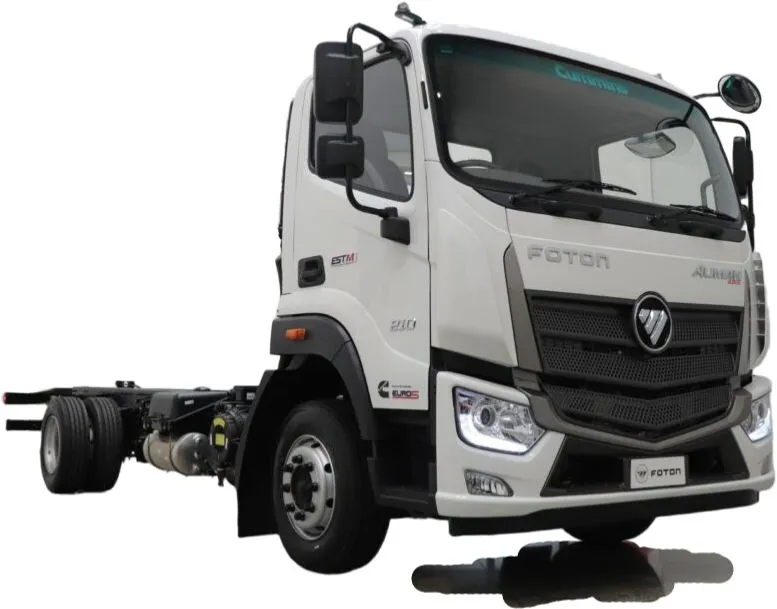
The 600 mm internal height is the second number to confirm. It appears on this listing and on its siblings in the same family, and it does not describe a closed van body of useful volume. The "upfitting / bodywork" field is empty here, so the listing is describing a chassis with a shallow platform. If you intend to run a box body, a curtain-sider or a dropside, specify it separately and get it in writing — you are not buying it as part of this listing.
Power comes from a Dongfeng Cummins ISDe245 30 under the option code ISD6.7, displacing 6,700 ml and producing 950 N·m of torque. The listing headline quotes 245 hp; the homologation table on the same page lists 180 kW. Those are different numbers and you should get the certified rating confirmed before you commit — but note that for urban work the torque figure is the one that matters and it is unambiguous at 950 N·m. What a city truck needs is the ability to pull away cleanly from every junction and every kerbside stop with a full load, and peak torque is what delivers that, not peak power.
The gearbox is a Shaanxi Fast 8JS105TA, an eight-speed manual listed under the code F-8MT. Eight ratios in a distribution truck is not over-specified; it is what lets the driver hold a usable gear between stops without skipping, and the splits matter more than the count when the truck is fully loaded and the street is on a gradient. No automatic or AMT option appears on this listing, so plan your driver training around a manual.
The final drive is 4.875. That is a short ratio, and it is the right choice for this duty. A shorter final drive multiplies torque at the wheel, which is what you want when the truck starts and stops forty times a shift and occasionally climbs a loaded ramp to a delivery dock. The cost is a lower top speed in the highest gear and higher engine rpm when you do run on the open road between towns. If your work is 90 per cent city, 4.875 is correct. If your routes turn out to be mostly intercity at sustained speed, this is the line to raise with the supplier before ordering, because a final drive is not something you change after delivery.
Seven wheels, on tube-type radial 10.00R20 as standard. Three tubeless alternatives are offered: imperial 11R22.5, metric 275/80R22.5 and metric 295/80R22.5. That option list is worth using. A tube-type tyre can be repaired at almost any roadside workshop with basic tools; a tubeless tyre needs a cleaner working surface and different equipment, but it runs cooler and loses pressure more slowly when punctured. For an urban fleet with a workshop and a tyre contract, tubeless is usually the better operating decision. For a regional fleet running out to towns where the only repair option is a man with a lever, tube-type is the safer one. Decide deliberately, not by default.
Suspension is leaf spring, with a count of 10 leaves at the front and 10+8 at the rear. That is a load-carrying setup, and an unladen distribution truck on that spring pack will ride firmly. It is also the right answer for a truck that sees kerbs, potholes and overloading — a leaf pack is cheap to repair, cheap to re-leaf, and does not need a compressed air supply or an electronic controller to keep working. The trade is driver comfort and cargo ride quality, both of which you should expect to be firm.
Brakes are air-operated, front drum and rear drum, with ABS as the listed control system. Drum brakes all round is a cost decision and for this duty it is a defensible one: drums seal better against dust and water than discs, and replacement shoes are cheaper. What you should check is whether the ABS configuration matches what your registration authority expects, because the listing names ABS without giving a channel configuration.

This is a row-and-a-half cab with a flat roof and two seats, left-hand drive, listed as a complete vehicle. Row-and-a-half means there is space behind the seat row but no full sleeper berth — enough for a driver's kit, a clipboard and a jacket, not enough to sleep in. For urban and regional work that is usually the correct compromise; you are not paying for a berth that will never be used, and you keep the shorter cab length inside the 8,560 mm overall figure.
Air conditioning is a manual unit as standard, with an electric air conditioner listed as an option. In a tropical climate, that option line deserves a hard look. A manual A/C keeps the cab cool once the engine is working; an electric unit can hold cabin temperature with the engine stopped, which matters on a truck that idles at delivery bays or shuts down between drops. The standard body package is central locking with electric windows, and the entertainment system — listed with radar — is MP3. Two optional body packages are offered: electric mirrors with heated mirrors, or manual doors and mirrors. Heated mirrors are a genuine safety item in humid conditions and cost very little at the point of order.
| Item | As standard | Listed options |
|---|---|---|
| Air conditioning | Manual air conditioner | Electric air conditioner |
| Body package | Central locking + electric windows | Electric mirrors + heated mirrors / manual doors and mirrors |
| Tyres | Tube-type radial 10.00R20, 7 wheels | Tubeless 11R22.5 / 275/80R22.5 / 295/80R22.5 |
| Rear axle ratio | 4.875 | Basic ratio (self-adjusting arms) / small ratio (self-adjusting arms) / small ratio |
| Brakes | Air brake, front drum + rear drum, ABS | Not listed |
| Fuel tank | 200 L | Not listed |
| Emission | Euro III, emission route not declared | Not listed |
Resolve the width contradiction. Body width is listed at 2,200 mm and internal cargo box width at 2,400 mm. Get the actual internal box width confirmed in writing before you commit to a pallet layout or a body build.
Resolve the power figure. The listing headline says 245 hp and the homologation table says 180 kW. Confirm which is the certified rating for announcement model BJ1226VMPHG-1.
Confirm the emission standard against your import permit. This truck is declared Euro III with no emission route listed — no SCR, EGR or DPF is declared, so there is no after-treatment to maintain and no DEF supply to arrange. If your import permit requires a higher emission standard, confirm this line before ordering.
Specify the body separately. The upfitting field is empty and the only internal height published is 600 mm. If you want a box, a curtain-sider or a dropside, price it and document it as a separate line on the order.
Check the axle ratings against your local limits. 5.5 tonnes front and 10 tonnes rear, under a 22,000 kg GVW, and no GCW is declared. Check this against your local axle-load limits before you commit, and do not plan to tow.
One more thing worth noting: this listing carries a sales country of Saudi Arabia even though it is presented here for Venezuela. That does not change the specification, but it does mean the truck was not originally homologated with a Venezuelan market in mind, so treat the emission standard, the left-hand drive confirmation and the registration paperwork as items to verify rather than assume. The truck is listed as a complete vehicle with a named approved model, which is what makes per-unit import realistic. The $31,770 figure is the published listing price — freight, duties and bodywork sit on top. Start from the route you actually run, then decide whether 4.875 and a 6.5-metre floor are the right answers for it.


Tel:+8615960378211
Email:[email protected]
Address: Unit 8,room 704,NO.492,XingLinWan Road,Jimei District,XiaMen Fujian China
Address: Unit 8,room 704,NO.492,XingLinWan Road,Jimei District,XiaMen Fujian China
Email:[email protected]
© Authorized Dealer of FOTON AUMAN 2026 All Rights Reserved, Auman truck is a commercial vehicle brand under the Foton Daimler
Privacy policy