Writer:Alan Chen(Foton Auman dealer)
A Kazakhstani mine or quarry buyer prices a dump truck on one question: will it haul a full box up the ramp all shift without cooking the clutch or the driver? The pit does not care about brochure language. It cares about torque at 1,000 rpm, the final drive, the axle ratings and whether the box is tall enough to move the material you actually dig. A 6×4 tipper is the workhorse here — not the biggest truck on site, but the one that runs the most cycles — and the specification has to earn its place on the ramp, not in a showroom.
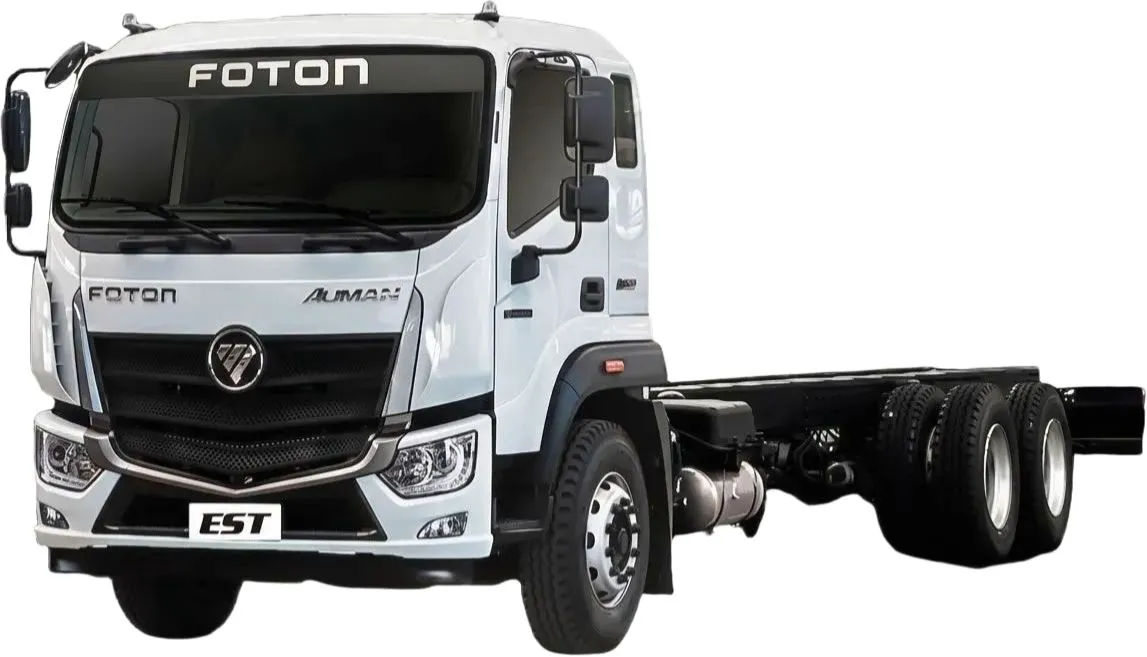
This article covers exactly one scenario: mining and quarry haulage in Kazakhstan. We look at a single configured unit, the Foton Auman GTL 6×4 400 PS tipper, and work through the real listing figure by figure, including one number on the sheet that needs clarifying before you order. Every figure below is taken from the published listing.

The engine is a Beijing Foton Cummins ISGe5-400, 11,800 cc, rated at 294 kW (400 PS) at 1,900 r/min, with 2,100 Nm of torque at 1,000 r/min. That low-end torque figure is the one that matters on a loaded pull: peak torque arrives at 1,000 rpm, so the truck makes its pulling power right where you launch a loaded box, not at the top of the rev range. Drive goes through a Shaanxi Fast 12JSDX240TA iron-casing 12-speed manual (option code F-12MT), and the final drive is 5.26.
A 5.26 rear axle ratio on a 6×4 tipper is a working, low-geared number. It trades top speed for the pull you need when the ramp is steep and the load is dense — ore, overburden, aggregate. If this truck were specced at 3.083 it would cruise but it would not climb; at 5.26 it climbs and that is the job. The 12-speed iron gearbox gives the driver a tight spread to keep the engine in its torque band on a variable grade.
The chassis carries a 9-tonne front axle and a 16-tonne middle/rear axle group. Gross vehicle weight is listed at 25,000 kg, with a gross combination weight of 62,000 kg. Now the number to be careful with: the listing also describes the unit as a "70T" tipper. Those three figures do not line up on their own — 25,000 kg GVW, 62,000 kg GCW, and a "70T" class label. Before you commit, ask the seller in writing which figure is the rated payload-plus-chassis and which is the marketing class, because they are not the same thing and the weighbridge will read one of them, not the badge.
The frame is a 225 / 320 × 90 × (8+7) section, and suspension is leaf spring at 9 leaves front and 12 rear. That is a heavy, repairable setup suited to repeated tipping cycles and rough pit roads. The approved model is BJ3259DLPKB-A1, a complete vehicle, which is what makes per-unit import practical rather than a kit build.

The dump body is 5,600 × 2,300 × 1,100 mm internal — about 14.1 cubic metres of box before you account for the heap. The 1,100 mm wall height and 2.3-metre width are the dimensions that decide whether you are moving broken rock or light overburden; dense material fills the box by weight long before it fills by volume, so the 1,100 mm sides are there to contain the load, not to maximise cube. For a 6×4 pit tipper that is the right trade, and the 5.26 ratio behind it is what gets a dense load moving.
Wheelbase is 3,825 + 1,350 mm and overall chassis size is 8,390 × 2,495 × 3,400 mm. The 12.00R20 16PR drive tyres run on 11 wheels, the fuel tank is 350 litres of aluminium alloy, and the truck is left-hand drive. None of those are surprises for a Central Asia mining chassis; the aluminium tank and the 16PR tyres are the right spec for dust, heat and long shifts between refuels.
The cab is a flat-roof unit with manual air conditioning as standard, electric windows, central locking, an air-sprung seat as standard, and electric heated rearview mirrors — a sensible detail for a cab that sits out in a Kazakhstani winter. The infotainment is MP3 + radio + USB with no radar. The listing's use case tags this as a cold-climate truck, but the published specification does not detail a cold-weather package such as an engine block heater, battery blanket or upgraded winter coolant, so if your site runs below freezing for long stretches, ask the seller exactly what cold-weather provision is fitted and get it in writing.

The payload figure. The listing shows 25,000 kg GVW, 62,000 kg GCW and a "70T" class label. They cannot all be the rated carrying capacity, so get the seller to state in writing which is the chassis GVW, which is the GCW, and what payload the box is rated for. Check that rated payload against your local axle-load and pit-road limits before you commit — a 70-tonne badge on a 25-tonne GVW chassis is the kind of line that needs the seller's signature, not a salesman's word.
Kazakhstan follows the post-Soviet weight standard — a single-axle limit around 10 t, a tandem limit up to 27 t and gross combination weight near 44 t — enforced by KazAutoZhol. Kazakhstan is the heart of the China–Europe Middle Corridor. The practical catch is that the steppe distances are enormous and the border crossings weigh every certificate, so a clean spec beats a higher rating. The core business is transit freight and grain haulage over vast distances, and a truck that is over on any axle is held at the weighbridge until the excess is shed.
For a tipper the binding constraint is the haul from the pit to the trunk road, where the the road authority weighbridge is the point where an over-loaded unit collects its fine — and transit freight and grain haulage over vast distances runs through here, so the box that fills to the headline weight on site can be over the axle caps before it reaches the highway.
In Kazakhstan the fleet is a mix of Russian KamAZ and MAZ, reconditioned European trucks (MAN, Scania, Volvo), and the newer Chinese entrants — Sinotruk, Shacman and Foton — that are winning share on price and a clean bill of health. The Russian and European stock wins on familiarity and parts but loses on age and the rebuild cost that lands within a couple of years. The new Chinese truck wins on warranty, and in a market where a breakdown on a remote corridor is expensive, a fresh truck is often the cheaper bet. Foton’s pitch is that middle ground.
1. Pin down the payload. Get GVW 25,000 kg, GCW 62,000 kg and the "70T" label explained in writing; confirm rated payload against your limits.
2. Confirm the emission route. Euro V with SCR is listed; verify AdBlue supply and local emission rules for your site.
3. Ask about cold-weather kit. The use case says cold climate, but the spec lists only manual A/C; confirm block heater / winter provision.
4. Match the box to the material. 5,600 × 2,300 × 1,100 mm holds dense rock by weight; confirm it suits your dig.
5. Count the wheels and fuel. 11 wheels on 12.00R20 16PR, 350 L aluminium tank — confirm spares and range for your shift.
The Auman GTL 6×4 is listed as a complete vehicle with a named approved model, which is what makes per-unit import realistic. The $57,293 shown is the published list price and a starting point for enquiry, not a landed cost — freight, duties and any site-specific bodywork sit on top. Start from the axle ratings and the 5.26 ratio, resolve the payload number, then work back to the price.


Tel:+8615960378211
Email:[email protected]
Address: Unit 8,room 704,NO.492,XingLinWan Road,Jimei District,XiaMen Fujian China
Address: Unit 8,room 704,NO.492,XingLinWan Road,Jimei District,XiaMen Fujian China
Email:[email protected]
© Authorized Dealer of FOTON AUMAN 2026 All Rights Reserved, Auman truck is a commercial vehicle brand under the Foton Daimler
Privacy policy