Writer:Alan Chen(Foton Auman dealer)
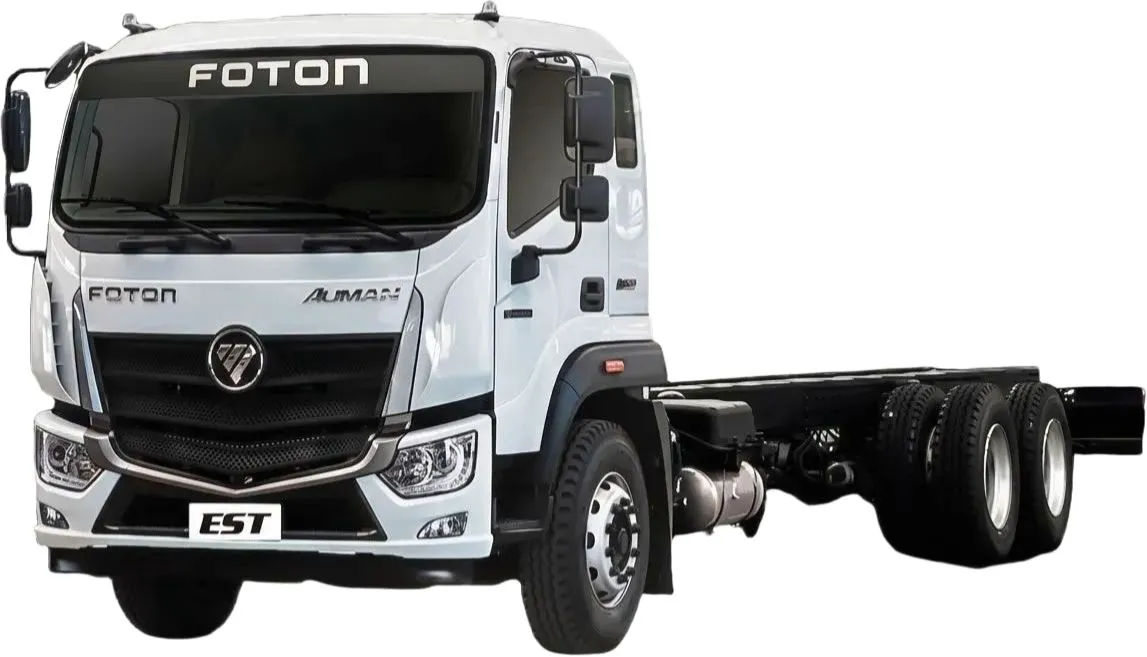
Two decisions dominate any 55-tonne dumper purchase, and neither is horsepower. The first is 6×4 or 8×4; the second is whether the emission level on the sheet can be registered where you operate. This Auman EST 6×4 dumper answers the first with a 4,100+1,350 mm wheelbase and a 6,000 mm bucket, and the second with a declared Euro III rating on a right-hand drive flat-roof cab. Underneath sits a Foton Cummins ISGe3-350 making 1,800 N·m across 1,000–1,300 rpm through a Sinotruk 12-speed and 5.26 axles. It is specified for mine work and infrastructure construction transport. Here is how we would assess it against those two decisions. Start from the Auman EST 6x4 dumper specification and read it alongside this.

The 6×4 turns tighter and costs less to buy, tax and tyre than an 8×4, while still carrying a 55,000 kg GCW. With a 4,100+1,350 mm wheelbase and a 6,000×2,300×1,500 mm bucket, this truck is aimed at dense material moved in confined spaces: ore from a pit, rock from a quarry face, or sand and gravel into a tight infrastructure site. An 8×4 adds a second steering axle, extra axle capacity and a longer body, which pays off where road axle limits are strict or the material is light and voluminous.
So the test is simple. If weight is your limiting factor — you hit 55,000 kg before you fill the body — the 6×4 is the cheaper tool. If volume is your limiting factor — you fill the body while still well under the weight limit — the longer 8×4 body earns its premium. Work out which limit you actually hit on a normal day, because buying the wrong one costs you on every single trip. The chassis here measures 8,800×2,545×3,450 mm with a 225/320×90×(8+7) mm frame, which is a heavy section for the duty.
"Buy the 6x4 when weight fills the truck before volume does. Buy the 8x4 when volume fills it first — everything else is secondary."

The engine is the Foton Cummins ISGe3-350: 10,500 cc, 257 kW / 350 PS at 1,900 rpm and 1,800 N·m from 1,000 to 1,300 rpm. That flat torque band matters more than the peak power figure, because it lets you hold a gear on a ramp instead of shifting constantly — and on a loaded haul road, every shift costs momentum. Producing full torque across a 300 rpm band rather than at one point is what makes a 350 PS truck feel bigger than its badge.
Drive goes through a Sinotruk HW19712 Iron (Q) 12-speed to 5.26 axles, with 9 T front and 16 T middle/rear ratings. Twelve ratios let you keep the engine between 1,000 and 1,300 rpm where the torque is, and the deep final drive multiplies that torque at the wheels — good for starting loaded and for low-speed control, less good for fast road transfers. If your haul includes long sustained gradients, or you run at the top of the weight limit all day, a higher-output alternative will cut cycle times for a modest premium. Price that premium against the minutes you would save per cycle.
The bucket is offered rectangular or U-type at 6,000×2,300×1,500 mm in Q345 steel with an 8 mm floor and 6 mm sides, lifted by a Hyva cylinder. Choose on material: the U-type sheds sticky clay and damp aggregate faster and keeps the centre of gravity lower on uneven ground, while the rectangular body carries more volume for the same length and is easier to line or repair in the field. At 6,000 mm, check that your loading shovel reaches the far end without the truck repositioning.
Middle and rear axles are offered as Q4, Q6, Q2, SB9, SB8 and SBA, and tyres as N6, Z7 and V3 on top of the standard 12.00R20 20PR mixed fitment across eleven wheels. For mine sites, prioritise the deeper ratio and a cut-resistant tread and accept a lower top speed; for long transfers to a crusher, a faster ratio and road pattern handle heat and wear better. Give the dealer your site-versus-road kilometre split and make them recommend a combination — it is the biggest lever on cost per tonne after payload.
Braking is air brakes with front and rear drums under ABS. Drums are right off-road: tolerant of grit, cheap to reline, repairable on site. They do not like sustained heat, and a loaded descent off a bench builds it fast — select the gear before the gradient and let the engine hold the truck. The sheet lists no engine brake or retarder, so ask whether one can be specified. The 350 L aluminium tank gives long shifts between fills, and the desert air filter is optional; take it if your site is dusty.
"A flat torque band from 1,000 to 1,300 rpm is worth more on a ramp than 50 extra horsepower at the top of the rev range."

The cab is a right-hand drive flat-roof unit seating two, with electric air conditioning, electric windows, central locking, a unified five-door lock, an air suspension seat and manual heated mirrors. The air suspension seat is the item that matters on broken haul roads, and the heated mirrors matter if you work at altitude or before dawn. Infotainment is MP3 + radio + USB with no radar, and satellite positioning is optional — if your dispatch needs tracking, specify it at order stage rather than retrofitting. Two seats and no bunk listed means single-shift operation.
Now the question that should be answered before any other: this truck is declared Euro III. Whether that emission level is accepted depends entirely on your country and on whether the truck is registered for on-road use, since mining-only fleets are often unaffected. Confirm the requirement with your import broker before ordering, then give the dealer your destination and ask whether the same model can be supplied to a different emission package with the documentation you need. A truck that cannot be registered is not cheap at any price.

The listing shows $52,662 with an FOB Tianjin/Qingdao RoRo figure of ¥288,009. Read those separately: the FOB RoRo quote covers rolling the vehicle onto a vessel at a named Chinese port, and ocean freight, insurance, destination charges and duties sit on top. Confirm which port applies and whether RoRo serves your discharge port. A truck this size — 8,800 mm long and 3,450 mm tall — is a materially different freight proposition from a tractor unit, so get the shipping line's view before you fix a budget.
The ISGe3-350 produces 257 kW and 1,800 N·m across 1,000–1,300 rpm through a Sinotruk HW19712 and 5.26 rear axles, enough to start and climb with 55,000 kg GCW in most pit and quarry conditions. The flat torque curve matters more than peak power, because it lets you hold a gear on a ramp instead of shifting constantly. If your haul includes long sustained gradients, or you run at the top of the weight limit all day, a 400 hp alternative will cut cycle times for a modest premium.
The 6×4, with its 4,100+1,350 mm wheelbase and 6,000×2,300×1,500 mm bucket, turns tighter and costs less to buy, tax and tyre than an 8×4 while still carrying 55,000 kg GCW. The 8×4 adds a second steering axle, extra axle capacity and a longer body, which pays off where road axle limits are strict or the material is light and voluminous. Choose the 6×4 for confined sites and dense material.
The specification declares Euro III for the 10.5-litre ISGe3-350, and the flat-roof cab is right-hand drive with electric air conditioning, electric windows and an air suspension seat. Whether that emission level is accepted depends entirely on your country and on whether the truck is registered for on-road use, since mining-only fleets are often unaffected. Confirm with your import broker, then ask whether the model can be supplied to a different emission package.
Whether an engine brake or retarder can be specified; which axle and tyre options are actually available for your build slot; the warranty terms and service intervals for the ISGe3-350 and the Sinotruk gearbox; and which emission documentation ships with the vehicle.
Our read: this is a well-matched tool for dense material moved in confined sites, where the 6×4's tighter turning and lower tyre bill matter more than ultimate volume. The flat torque band and the 12-speed are what will make it feel capable at 55 tonnes. The two things to close before ordering are registration — Euro III and RHD must both work in your market — and the axle and tyre options, which you should choose from your actual site-to-road split rather than accepting the standard fitment.
Get those answers and a landed figure for your discharge port, and the decision becomes straightforward. The Auman EST 6x4 dumper page has the full sheet and the option list.


Tel:+8615960378211
Email:[email protected]
Address: Unit 8,room 704,NO.492,XingLinWan Road,Jimei District,XiaMen Fujian China
Address: Unit 8,room 704,NO.492,XingLinWan Road,Jimei District,XiaMen Fujian China
Email:[email protected]
© Authorized Dealer of FOTON AUMAN 2026 All Rights Reserved, Auman truck is a commercial vehicle brand under the Foton Daimler
Privacy policy