Writer:Alan Chen(Foton Auman dealer)
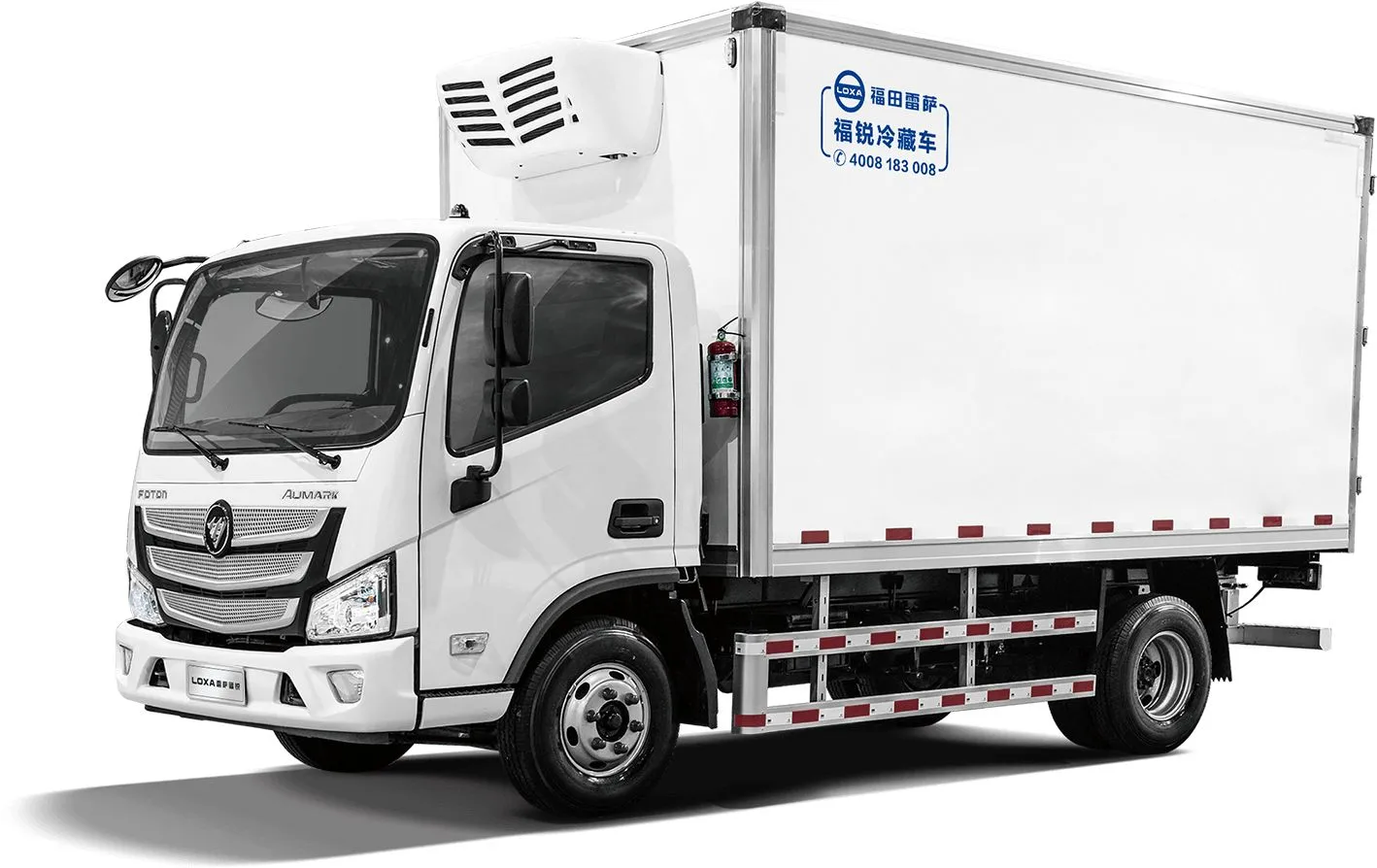
Cold chain in West Africa is not measured in brochures. It is measured in the distance between the catch and the market, the hours the ice has, and whether the truck carrying it can be fixed in the town it delivers to. The Aumark S 8.5T refrigerated truck built for Sierra Leone answers that test with a deliberately small set of commitments: an 8.5-tonne 4x2 on a 3,360 mm wheelbase, a single-row left-hand-drive cab for three, and an insulated box recorded internally at 4170×2100×2100 mm wearing a Thermo King RV589 unit. We went through the sheet to find whether air brakes and a ZF gearbox at this price really hold up.
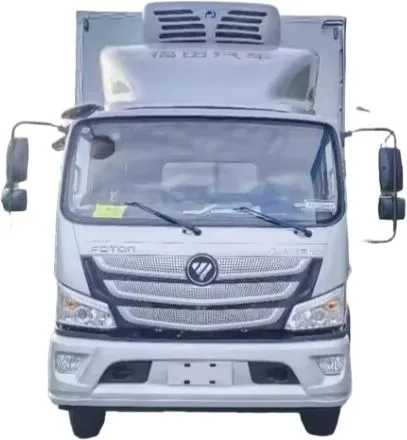
Under the bonnet sits the ISF3.8s3154 from Beijing Foton Cummins, a 3,760 ml in-line four at Euro III rated at 115 horsepower at 2,600 r/min. The number that matters is the other one: 500 N·m from 1,200 to 1,900 r/min. That plateau is what refrigerated work demands, because a roof-mounted unit adds continuous load and there is nothing spare at the top of the range.
Euro III matters more here than it looks on paper: no aftertreatment route, no urea system and no dosing hardware appear in the record, so there is no fluid supply chain to break, no catalyst to be poisoned by the sulphur regional fuel can carry, and no derate logic to strand a truck full of frozen fish in 35-degree heat.
The transmission is a ZF 6S500 six-speed manual — a German gearbox that is a rarity at this end of the market and a genuine point of difference on an order sheet — driving a rear axle through a 4.3 final drive. Six ratios on a small diesel cover the laden start, the market crawl, the intercity run and the hill descent without the gaps that plague lighter boxes. The 4.3 stepping is a working ratio chosen to keep the engine inside its torque band, which matters enormously once a compressor doubles the accessory load.
"This is a drivetrain specified for hot, loaded, stop-start reality rather than for a catalogue."
Standard equipment includes cruise control and power steering, which describe real highway intent on light-truck bones, and both earn their place on long coastal runs. The manual cab tilt keeps the daily engine check a five-minute job rather than a workshop visit.
Why do many eight-tonne trucks run hydraulic brakes while this one runs air brakes with ABS and EBD? Because a loaded refrigerated truck is a heavy vehicle in everything but name. Air delivers consistent pedal effort as linings wear, keeps working through the salt air and standing water of a coastal economy where hydraulic systems corrode, and every commercial workshop on the West African corridor already diagnoses and rebuilds it.
Drums front and rear shrug off the grit that punishes disc hardware here. ABS keeps the wheels turning under a hard stop on wet laterite, and EBD apportions braking between the loaded rear axle and the light steer axle — exactly this truck's daily condition, as its front-end weight swings from empty return to fully laden outbound. Upkeep is simple: an air dryer cartridge, slack-adjuster checks and drum service at normal intervals.
Credit where it is due: this record is coherent. GVW reads 8.5 tonnes while the axles are rated 2.85 tonnes front and 6 tonnes rear, an installed sum of 8.85 tonnes — the axle group brackets the gross rating with a sensible margin instead of contradicting it. Compare that with half the trucks we look at, where the headline weight and the hardware tell completely different stories.
The arithmetic still needs one missing number: curb weight, which this record does not give. Subtract it from 8,500 kg and what remains is your lawful cargo allowance, and the insulated body — several hundred kilograms with a roof-mounted unit — must come off that before any tonnage is promised. For a reefer the working rule is blunt: weigh the completed vehicle at delivery, write the real payload on the door, and price freight against that number. In cold chain, refused loads and failed compressors trace back to optimistic tonnage more often than to anything mechanical.
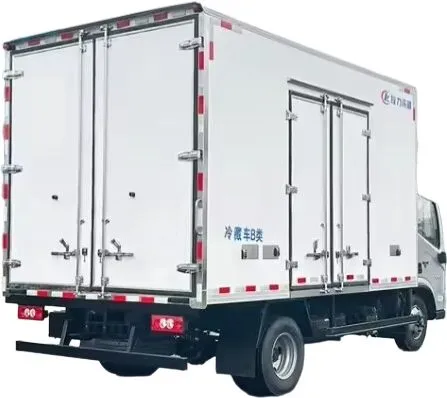
Internal dimensions of 4170×2100×2100 mm give roughly 18.4 cubic metres, with a floor sized for pallets, crates and rails of fish rather than loose grain, and 2,100 mm inside so a man can stand and work the load. A roof-unit reefer in this class serves chilled and frozen distribution: the coast-to-city runs of fresh fish, produce, dairy and pharmaceuticals.
Now the honest limits of what this record tells us. There is no wall insulation thickness, no door detail, no temperature range, no pull-down figure, no backup power or genset, and no bodybuilder name beyond the refrigeration model — all of which decide what cargo this Aumark S reefer truck may lawfully and practically carry. Insist on pull-down and hold tests at handover against the box actually built, not against a model number on the roof.
"Insist on measured pull-down and hold tests at handover. A model number on the roof is not a temperature guarantee."
The frame section is 214×65×5 mm — a real ladder rail rather than a car-derived section — with leaf springs both ends, three leaves ahead and an eight-plus-six progressive pack behind. That rear pack tells you the factory expected this truck loaded repeatedly, and it keeps the body mounting simple, which matters because a cold box transmits corner loads straight into the chassis every time bad road racks the cargo.
Tyres are tubeless imperial 7.50R16, six plus a spare, a light-truck highway size with plug-repair convenience. Verify local stocking before ordering, since 7.50R16 is less universal in West Africa than the metric 215/75R16 family sharing its rim space. The tank holds 120 litres, and a cold box adds idle load that the tank quietly prices in.
Coastal protein distribution comes first: the daily fish run from landing sites to cold rooms and markets, where 18.4 cubic metres, air brakes and a simple Euro III engine match the load, the roads and the workshops available. Second is produce and dairy collection from hinterland farms to city retail, where pull-down on warm product matters and the wide torque band lets the engine carry the compressor without losing the schedule.
Third is mixed-contract work for a beverage, food-service or pharmaceutical operator wanting one truck that runs cold by day and dry by night — the flexibility argument for buying reefer spec over a plain van body. What does not fit is long-haul frozen transit across national distances; single-row seating for three and a regional tank describe a radius operation, so price a larger chassis with auxiliary power instead.
Nearly every consumable here is commodity: the ISF diesel has no dosing system to fail and carries a global service footprint, while the ZF box, drum brakes, leaf springs and tubeless tyres are stocked or machined by any commercial workshop in the corridor. The reefer unit is a branded product with parts channels in regional port cities, which is precisely why Thermo King appears on the sheet at all.
The cab list is a working one: knitted seats for three, MP3, manual doors, windows and mirrors, and air conditioning as a fitted option rather than standard. In this market close that gap with money, because a driver working beside a running condenser has a fatigue problem that no refrigeration unit solves. No payload, temperature range, fuel consumption or warranty term appears in the record, so we claim none, and Euro III acceptance should be verified for your ownership horizon. The price figures do not reconcile either, so get a written landed number before budgeting.
Yes, and the numbers show why. The ISF3.8s3154 makes 500 N·m across 1,200–1,900 r/min, a genuinely wide plateau, which is what refrigerated work demands because the compressor adds continuous load and there is nothing spare at the top of the range. The ZF six-speed gives a low step for a laden start on a market ramp and a relaxed top for the coast road, and the 4.3 axle keeps the whole thing inside that band rather than hunting gears on a climb.
Because a loaded reefer is a heavy vehicle in all but name. Air gives consistent pedal effort as linings wear, resists the corrosion that coastal salt air inflicts on hydraulic systems, and is understood by every commercial workshop in the corridor. ABS holds steering on wet laterite and EBD apportions braking between a light steer axle and a loaded rear axle — precisely this truck's daily condition as it swings between empty return and full outbound.
About 18.4 cubic metres, with roughly 8.8 square metres of floor and a full two metres of standing height. Yes, the chassis supports it: a 2.85-tonne front axle plus a 6-tonne rear gives 8.85 tonnes of installed capacity against an 8.5-tonne gross, so the axles bracket the rating rather than falling short. The 214×65×5 mm rails and the fourteen-leaf rear pack take the box's corner loads directly.


Tel:+8615960378211
Email:[email protected]
Address: Unit 8,room 704,NO.492,XingLinWan Road,Jimei District,XiaMen Fujian China
Address: Unit 8,room 704,NO.492,XingLinWan Road,Jimei District,XiaMen Fujian China
Email:[email protected]
© Authorized Dealer of FOTON AUMAN 2026 All Rights Reserved, Auman truck is a commercial vehicle brand under the Foton Daimler
Privacy policy


