Writer:Alan Chen(Foton Auman dealer)
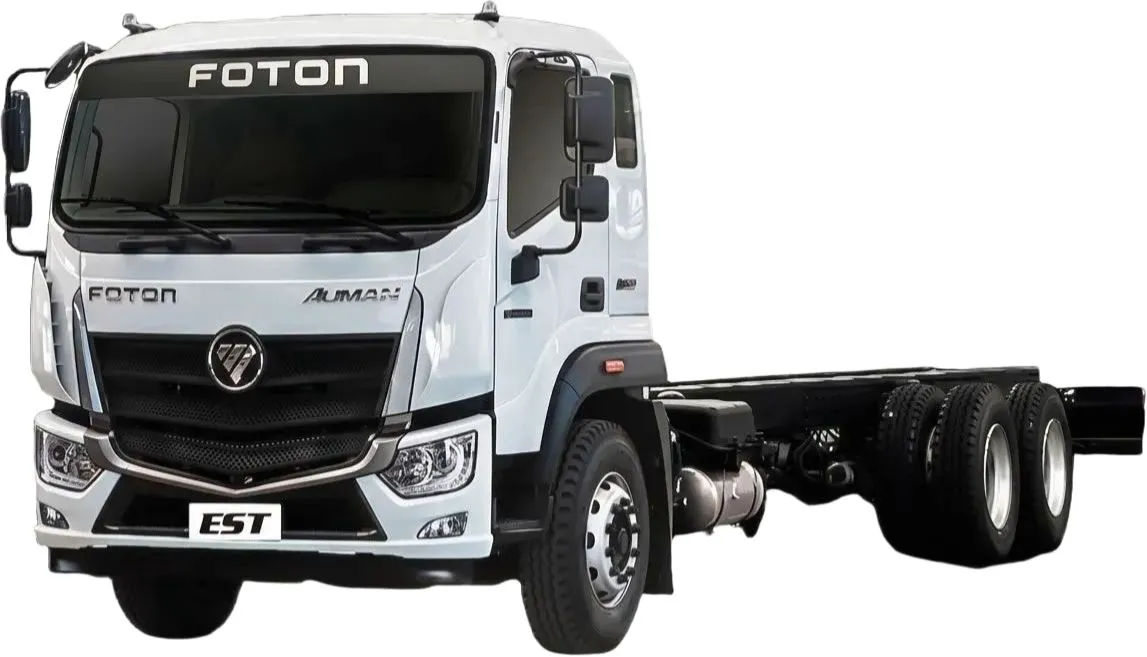
Two Foton Auman 6×4 tractors. Both 11.8 litres of Foton Cummins. Both 460 horsepower. Both 2,300 N·m. Both driving through a ZF 12TX2421TD twelve-speed automated gearbox in an aluminium case.
One is approved to 90 tonnes gross combination weight. The other to 40.
That is not two different trucks. That is one powertrain, specified twice, and the difference comes down to a single number that most buyers never read: the final drive ratio. It is 4.03 on the EST 460 and 2.846 on the GTL Star Wing 460. That one line is worth more than every other specification on this page combined.

| Item | EST 460 (#233) | GTL Star Wing 460 (#5) |
|---|---|---|
| Price | $64,759 | $68,840 |
| Fuel | Diesel | LNG |
| Engine | Cummins ISGe5-460 | Cummins X12NNS6B460 |
| Displacement | 11,800 ml | 11.8 L |
| Power | 331 kW / 460 hp at 1,900 rpm | 338 kW / 460 hp at 1,900 rpm |
| Torque | 2,300 Nm at 1,100 rpm | 2,300 Nm at 1,000–1,300 rpm |
| Emission | Euro V | China VI |
| Gearbox | ZF 12TX2421TD, aluminium, AMT | ZF 12TX2421TD, AMT |
| Retarder | Hydraulic retarder, standard | not published |
| Final drive | 4.03 | 2.846 |
| GCW | 90,000 kg | 40,000 kg |
| GVW | 25,000 kg | 25 t |
| Kerb weight | 10,800 kg | 8.805 t |
| Saddle load | 14,070 kg | not published |
| Permitted trailer mass | 79,070 kg | not published |
| Wheelbase | 3,300 + 1,400 mm | 3,825 + 1,350 mm |
| Front axle | 9 t | not published |
| Rear axle | 16 t Mercedes-type, cast housing | 18,000 kg dual axle group |
| Max speed | 85 km/h at 4.03 (89 at 3.86, 82 at 4.2) | 80 km/h |
| Gradeability | ≥ 25% | not published |
| Fuel capacity | 700 L aluminium | 1,350 L gas cylinder (optional) |
| Suspension | Front leaf + anti-roll bar + damper; rear balanced | 3 leaves front |
| Frame | 225/286 × 80 × (8+7) mm | not published |
| Market | Oman (GCC) | not published |


Final drive ratio is the last reduction before the wheels. A 4.03 means the engine turns 4.03 times for every turn of the axle. A 2.846 means 2.846 times. The difference in torque multiplication at the wheels is roughly 42% in favour of the EST.
That is why the EST is rated to 90 tonnes and the Star Wing to 40. It is not a stronger engine, a heavier frame or a bigger clutch — it is leverage. Put the same 2,300 N·m through a 4.03 and you get far more force at the tyre contact patch than through a 2.846.
The trade is speed. The EST sheet publishes this precisely: 89 km/h with a 3.86 ratio, 85 km/h with 4.03, and 82 km/h with 4.2. The Star Wing publishes 80 km/h. So the geared-for-work truck is still the marginally faster one here, because the Star Wing’s 2.846 is paired with a lower published maximum — but the relationship is clear: raise the ratio and you trade cruise for pull.
Practical consequence: on the wrong ratio, a truck that is perfectly capable in engineering terms will feel weak. It will need more downshifts on grades, it will slip the clutch more on start, and it will wear its driveline faster. This is the single most expensive specification mistake you can make on a tractor.
Match the axle ratio to your heaviest regular combination, not your average one. A tractor geared for its average day will be geared wrong on every day that matters.
The second big difference. The EST is a diesel truck homologated to Euro V. The Star Wing runs liquefied natural gas homologated to China VI.
China VI is the stricter certificate. Euro V is the more widely recognised one outside China. Which matters depends entirely on your registration authority — and the EST is specified for Oman and the GCC, where Euro V is the relevant standard.
On fuel, the economics are entirely local. LNG is cheaper per unit of energy in some markets and not in others, and it brings three real constraints: you cannot carry spare fuel, the refuelling network is thinner, and the cylinders add weight and take space behind the cab.
The Star Wing lists a 1,350-litre gas cylinder as optional, with a kerb weight of 8.805 tonnes — two tonnes lighter than the EST’s 10,800 kg despite carrying the same engine. Some of that is the LNG specification, and it is worth noting because kerb weight is payload you either have or do not.
The Star Wing product material also claims specific technology: a dual-stage after-treatment system and a coupling three-way catalytic system improving thermal management efficiency by 30%, a high-precision HFI injection system and CMI control for accurate gas supply. Those are meaningful claims for a gas engine, where metering accuracy drives both consumption and emissions compliance.
This is unusual and valuable. The EST publishes kerb weight at 10,800 kg, design gross vehicle mass at 25,000 kg, design saddle load at 14,070 kg, permitted trailer mass at 79,070 kg and GCW at 90 t. Those five numbers let you plan an operation properly. The Star Wing publishes only kerb, GVW and towing weight.
The saddle load is the one experienced operators look at first, because it is what your trailer’s kingpin actually presses down with. Fourteen tonnes of saddle capacity tells you this chassis was designed for a seriously loaded trailer.
On a 90-tonne combination, a retarder is not a comfort feature. It is what keeps your service brakes alive on a long descent, and it is the difference between arriving at the bottom and not. The Star Wing sheet does not mention one.
A 16-tonne Mercedes-type rear axle with a cast housing, self-adjusting arms and ABS, on a 9-tonne front axle. Cast housings resist deflection better than fabricated ones under sustained load.
700 litres of diesel against a gas cylinder. Diesel you can buy anywhere; LNG you cannot. If your routes are remote, that is a decisive point for the EST.
Do not read this as the EST winning outright. The Star Wing is $4,081 dearer and gives up half the rating, but it is the right answer in specific circumstances.
It is roughly two tonnes lighter, which is two tonnes of payload. It carries the cleaner China VI certificate. It has a wider published torque band — 1,000 to 1,300 rpm against a single 1,100 rpm peak on the EST — which makes it more forgiving of being in the wrong gear. And if LNG is materially cheaper than diesel where you operate, the fuel bill difference over a 90-tonne-rated truck’s working life is very large.
It is also worth saying: a 2.846 axle with 460 hp and 2,300 Nm is a genuine highway-cruise specification. If your work is 40 tonnes on paved road, the Star Wing will do it more economically than the EST, because the EST is carrying gearing it never uses.
Buy the EST 460 if you haul 90 tonnes or anything near it: mining haulage, bulk cargo, heavy machinery lowbeds, loaded tippers that must start on a grade. You need the 4.03, the retarder and the 14-tonne saddle.
Buy the GTL Star Wing 460 if your combinations top out around 40 tonnes, your routes are paved and predictable, LNG is cheaper than diesel in your market, you need China VI, and you want the two-tonne kerb weight advantage.
And if you are somewhere in between, be honest about where your heavy end sits. Buying a 40-tonne truck for a 90-tonne day is dangerous; buying a 90-tonne truck for a 40-tonne day is merely wasteful.
First, it publishes three maximum speeds for three axle ratios — 89 km/h at 3.86, 85 at 4.03, 82 at 4.2. That means the ratio is a choice, not a fixed specification. If you want the 90-tonne rating with a little more cruise, or you want to give up a little rating for speed, that conversation is available. Ask which ratios your build can be ordered with.
Second, it publishes commercial terms directly on the specification: 30% advance by bank transfer with the 70% balance before delivery, a 45-working-day manufacturing cycle after payment, 30 days of quotation validity and a 12-month product warranty. That level of disclosure is unusual and useful — it means you can plan cash flow and delivery around documented terms rather than discovering them later.
Also worth flagging for fleet planning: a 240 Ah AGM battery, a horizontal air cleaner, a transverse rectangular muffler, an integral wheel fender and a working platform. Those are the unglamorous items that determine whether a truck is pleasant to service and to operate day to day.

Effectively. Both 11.8 litres of Foton Cummins at 460 hp and 2,300 Nm, one in ISGe5 diesel form and one in X12N LNG form. The gearbox is the same ZF 12TX2421TD. The difference is fuel and final drive.
Mainly the axle ratio: 4.03 against 2.846. That is roughly 42% more torque multiplication at the wheels on the EST, and it is what allows the 90 t rating on otherwise similar hardware.
The EST publishes 85 km/h at its 4.03 ratio, with 89 at 3.86 and 82 at 4.2 available. The Star Wing publishes 80 km/h. In practice both are speed-limited to a similar figure.
The EST lists a hydraulic retarder as standard. The Star Wing sheet does not mention one — confirm if your routes involve long descents.
Roughly two tonnes on kerb weight: 8.805 t against 10,800 kg. That is payload, but check what the gas cylinders weigh in the configuration you are quoted.
90 t diesel tractor
Foton Auman EST 460 6×4 90t Tractor Truck
$64,759 · 460 hp · Cummins ISGe5 11.8 L · ZF 12-speed AMT · 4.03 axle · GCW 90 t
View full specification40 t LNG tractor
Foton Auman GTL Star Wing 460 6×4 LNG Tractor
$68,840 · 460 hp · Cummins X12N 11.8 L · ZF 12-speed AMT · 2.846 axle · China VI
View full specification

Tel:+8615960378211
Email:[email protected]
Address: Unit 8,room 704,NO.492,XingLinWan Road,Jimei District,XiaMen Fujian China
Address: Unit 8,room 704,NO.492,XingLinWan Road,Jimei District,XiaMen Fujian China
Email:[email protected]
© Authorized Dealer of FOTON AUMAN 2026 All Rights Reserved, Auman truck is a commercial vehicle brand under the Foton Daimler
Privacy policy