Writer:Alan Chen(Foton Auman dealer)
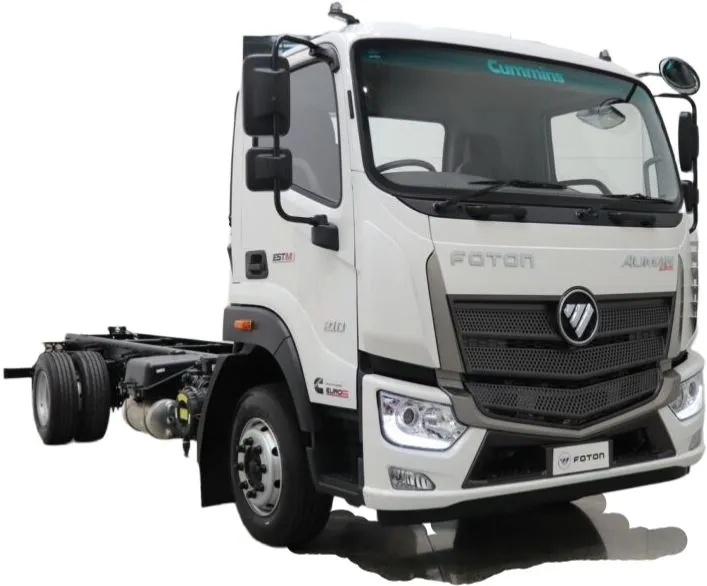
A rigid is bought on different questions from a tractor and trailer. It has to turn inside a distribution yard, hold a gradient laden, and still hand you a legal payload after the body goes on. The Aumark EST-M 22T 4x2 box body truck, model BJ1226VMPHG-1, is prepared for Venezuela with 22,000 kg gross vehicle weight on a 4,800 mm wheelbase, a chassis measuring 8560×2468×2780 mm under a row-and-a-half flat-roof cab. Power is a Dongfeng Cummins ISDe245 30 — 6,700 ml, 180 kW, 950 N·m at Euro III — through a Shaanxi Fast 8JS105TA onto a 10-tonne rear axle at 4.875. At USD 35,240 we wanted to know where the compromise sits.
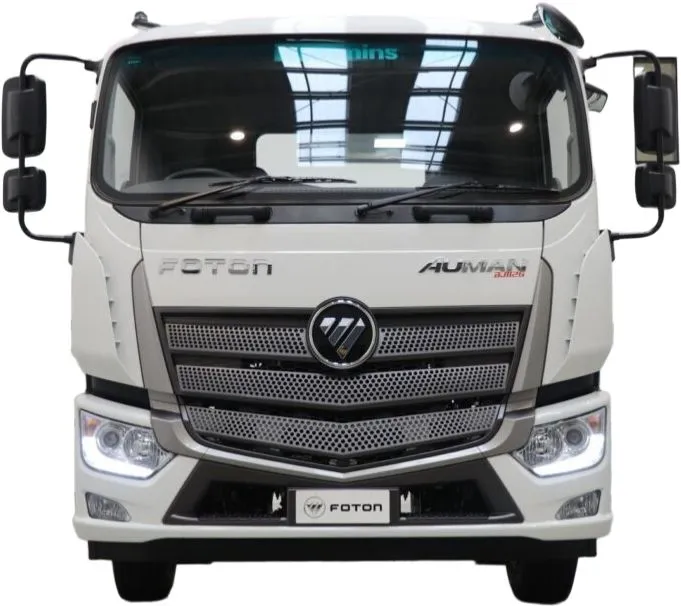
The strongest item here is the engine. A 6.7-litre ISDe rated at 180 kW with 950 N·m puts far more emphasis on torque than on horsepower, and torque is what a 22-tonne vehicle uses in traffic. Torque per litre works out at roughly 142 N·m — a moderate specific loading, the signature of an engine working within its capacity rather than being squeezed.
Euro III rather than Euro V removes the aftertreatment dependency entirely: no urea to source from a supply chain you must maintain, no dosing module to clog, no NOx sensor ladder to diagnose, no catalyst substrate to be poisoned by the sulphur and water content distant fuel distribution can carry, and no emissions fault derating your torque halfway through a delivery round. The exposure is regulatory, and real: a Euro III unit may not qualify for new registration or renewal inspection if rules tighten. Confirm what the Venezuelan authority accepts before you order.
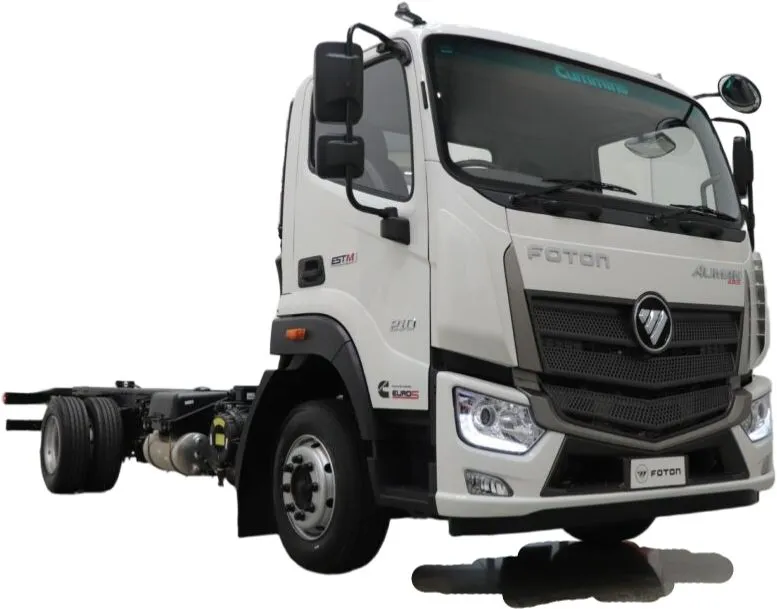
The Shaanxi Fast 8JS105TA gives eight forward ratios, and eight ranges are not a luxury on a 22-tonne 4x2 — they are a necessity. One vehicle has to leave a loading dock at maximum mass and then hold a reasonable engine speed on open road, and only a wide spread does both. The intermediate steps let a driver find a gear that maintains momentum on a climb instead of lugging the engine or resting on the brakes. Fast cases of this family are iron-housed, cheap to rebuild, and their parts circulate through every market in the region.
"Buy this as an axle-limited vehicle, not a gross-weight-limited one. That single distinction decides every body you can legally build."
Note one omission early: the record lists no power take-off for this build. If your body needs hydraulic power, specify it at order stage, not on arrival.
Read this carefully, because it decides what you may build. There is a 5.5-tonne front axle and a 10-tonne rear axle — 15.5 tonnes of rated axle capacity against a 22,000 kg gross in the same table. Those two figures cannot both bind, and the practical consequence is that the rear drive axle governs. On a 4x2 the rear carries most of the laden mass once a long body goes on, since overhang behind a 4,800 mm wheelbase adds leverage rather than relief.
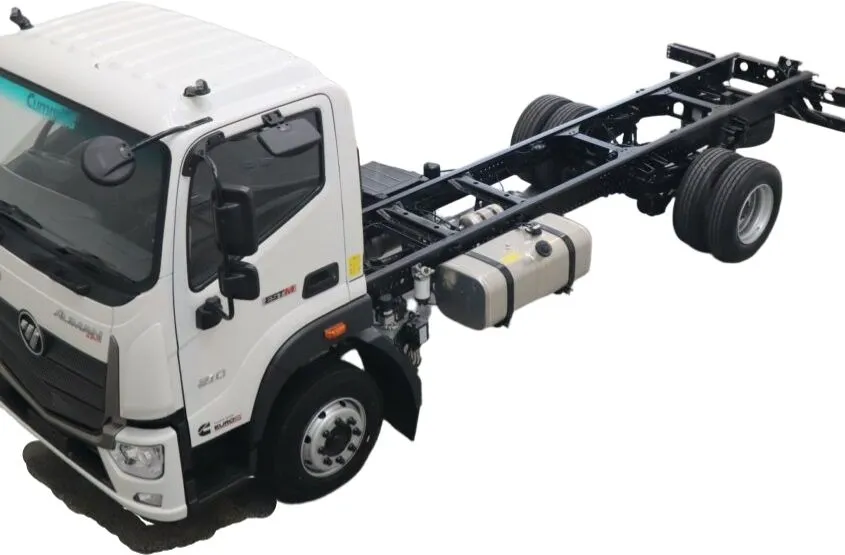
So add body tare, 200 litres of fuel, two occupants and your heaviest typical load, then ask where that mass sits on the drive axle. Overload at the drive end shows as spring-seat cracking, hub and bearing heat, rapid drive-tyre wear and a laden rear that steps out first in the wet. Body material is your fastest lever — an aluminium or composite box recovers several hundred kilograms against a steel van, and on this axle grouping that recovered weight is the only free performance available.
The chassis uses a 250 mm frame section, the deep heavy-duty rail profile rather than the medium-duty sections of lighter models. That depth gives a bodybuilder clamping length and needs no reinforcement merely because a panel-sided van is fitted — which is why this box body truck conversion is straightforward and cheap.

Suspension is leaf springs throughout, ten leaves at the front and a ten-plus-eight pack behind. That rear arrangement is progressive: a main stack for an acceptable empty ride, with an eight-leaf helper engaging as load is applied so spring rate rises with the mass carried. Ten leaves at the front tells you the designers expected kerb strikes and unsealed loading areas. The stated body width of 2,200 mm is pallet-friendly and the practical limit for legal width in most jurisdictions.
Braking is air actuated with drums front and rear and ABS as the control system, with seven tyres including the spare. Air actuation is the right answer at this weight, because the compressor keeps supplying pressure as linings wear. ABS on a 4x2 rigid is more valuable than buyers assume: an empty vehicle has a lightly loaded rear axle that locks readily on wet paint or spilled diesel, and the modulator keeps the back in line during a panic stop.
"There is no exhaust brake, no retarder and no decompression brake here. On a loaded descent all that energy goes into the gearbox or the linings."
The gap is genuine: the record lists no auxiliary braking system for this build. On a loaded mountain descent every joule must be absorbed by the driveline or by friction lining, so the method has to be gear-selective — eight ratios plus the 4.875 final drive gives a low enough gear to hold a safe speed on the engine, with the drums used to slow and stop rather than to control the gradient. Drums fade, and fade on a heavy rigid takes kilometres to recover.

Tyres are tubed radial 10.00R20, a size retained for availability and price. Tubes mean a puncture can be repaired at the roadside without specialist tooling, at the cost of heat retention during continuous high-speed running. Fuel capacity is 200 litres, small for this class, and combined with the wind deflector, the 4.875 ratio and the 4,800 mm wheelbase it defines this as a route truck with predictable refuelling rather than a long-haul machine.

Cab specification is a working one: manual air conditioning as standard, an MP3 head unit, central locking with electric windows, and an overseas driving recorder — a fleet-management requirement rather than a comfort item, worth noting if you run contract work with auditable hours.

As a regional distribution truck moving consumer goods, beverages, packaged food and spare parts on fixed circuits, refuelling happens at a depot, so 200 litres stops being a limitation. Building materials are where the 250 mm frame and ten-plus-eight pack are the whole argument, and where the axle warning bites hardest because that freight is dense.

A 6.7-litre Cummins with no aftertreatment has no dosing pump, no NOx sensor ladder, no urea heater loop and no catalyst to fail, so whole categories of modern diesel downtime simply do not exist here. What wears — linings, springs, shackles, clutch plate, belts, filters, wheel seals — is commodity stock in any regional workshop. Price honestly against that: 200 litres limits range, drums without a retarder will be replaced more often on gradient work, and the 10-tonne rear axle constrains your body more tightly than the 22-tonne headline suggests.
"Fifteen and a half tonnes of axle rating against twenty-two tonnes of gross is not a rounding difference. Resolve it before you commission a body."
Be clear about the gaps. No payload, body length, cargo volume, kerb weight, fuel consumption, range, gradeability or turning circle is published for this configuration, so we claim none — effective payload must come from the certificate for the exact approved variant. No warranty, service interval or after-sales commitment appears in the record, and Euro III acceptance must be verified against current Venezuelan rules. Everything above comes from the build sheet for the Aumark EST-M 4x2 freight truck and nothing else.
The axle ratings govern. Add body tare, 200 litres of fuel, two occupants and your heaviest load, then find out where that mass sits on the drive axle, because drive-end overload cracks spring seats, cooks bearings, eats 10.00R20 casings and makes the rear step out on a wet descent. Body material is the fastest lever — aluminium or composite panels rather than steel. Get the permitted axle loads from the completed-vehicle certificate first.
It costs nothing except at a future registration or inspection gate, and saves every week in the engine bay: no urea supply chain, no dosing injector, no sensor ladder, no catalyst to poison, no emissions fault derating you mid-round. The risk is regulatory, not mechanical — confirm now what the authority accepts for new registration and renewal inspection, and price the risk yourself.
On a plan rather than on the brakes. With no exhaust brake, retarder or decompression brake listed, select a gear that holds safe speed with the engine governed and use the drums only to slow or stop. Plot refuelling before the climb rather than after it, and treat an itinerary built on continuous mountain kilometres as a case for a different build.


Tel:+8615960378211
Email:[email protected]
Address: Unit 8,room 704,NO.492,XingLinWan Road,Jimei District,XiaMen Fujian China
Address: Unit 8,room 704,NO.492,XingLinWan Road,Jimei District,XiaMen Fujian China
Email:[email protected]
© Authorized Dealer of FOTON AUMAN 2026 All Rights Reserved, Auman truck is a commercial vehicle brand under the Foton Daimler
Privacy policy